


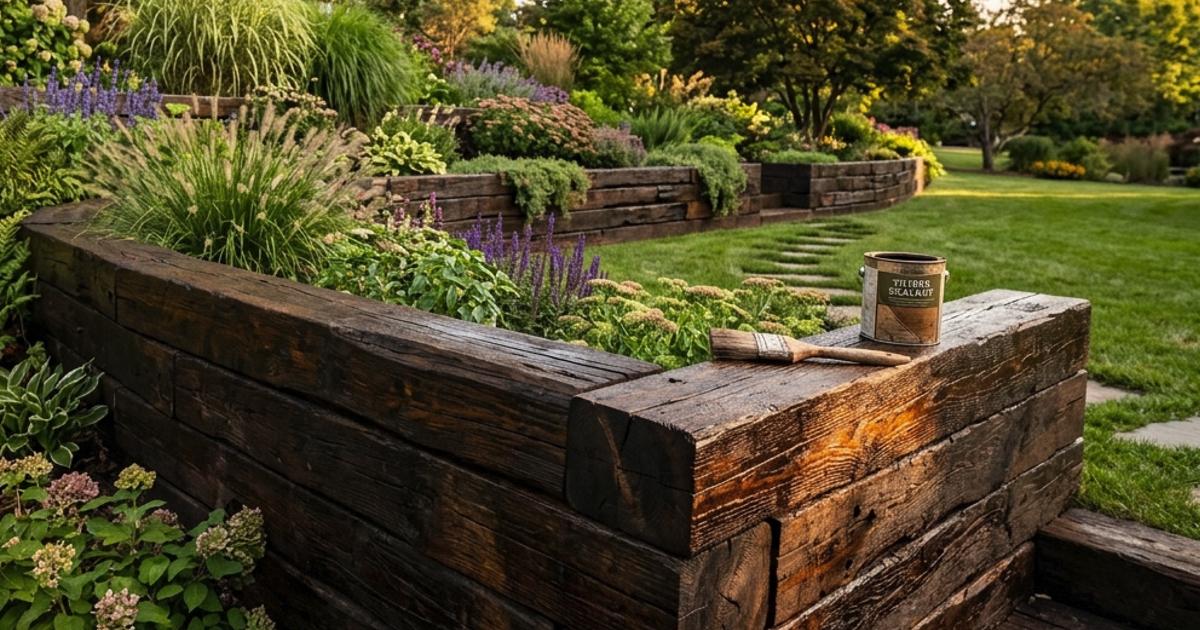

Landscape wood structures occupy a unique and often overlooked corner of the surface protection world. Railroad ties, timber retaining walls, landscape timbers, and similar heavy-duty outdoor wood installations take an incredible amount of abuse. They sit directly in contact with soil, endure freeze-thaw cycles, absorb pooled rainwater from above and below, and face relentless UV exposure season after season. Most homeowners and even some contractors treat these surfaces as an afterthought when it comes to sealing and protection. That is a costly mistake that leads to premature rot, structural failure, and expensive replacement projects that could have been avoided.
At INSECO, we have spent decades formulating specialty coatings designed to perform in the most demanding real-world environments. Landscape wood structures are one of the toughest challenges in the coatings industry, and understanding how to approach them properly makes all the difference between a timber installation that lasts five years and one that lasts twenty-five or more. This guide breaks down everything you need to know, with pro-level insights drawn from years of field experience and product development.
Understanding Why Landscape Wood Structures Are So Difficult to Protect
Before diving into application techniques, it is critical to understand why landscape wood structures present such a unique challenge compared to decks, fences, or siding. The failure modes are different, and so the protection strategy must be different as well.
Ground Contact and Moisture Migration
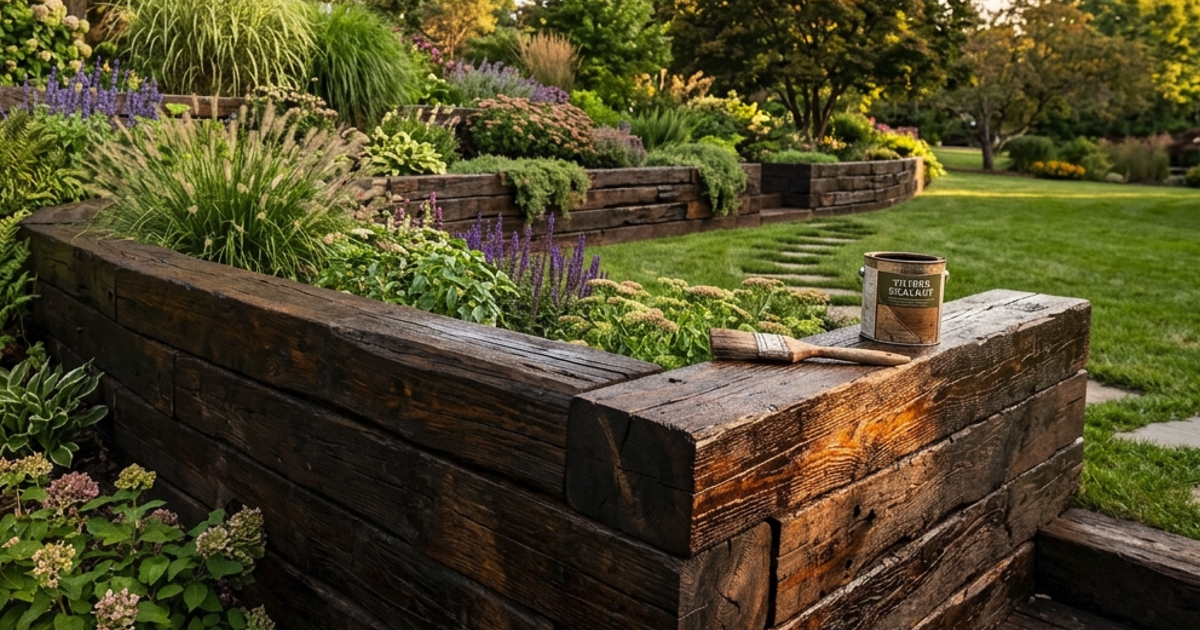
Railroad ties and retaining wall timbers are almost always in direct or near-direct contact with soil. Soil holds moisture year-round and creates a constant wicking environment at the base of these structures. Even pressure-treated lumber, which contains preservatives designed to resist rot, can fail prematurely when moisture continuously migrates through the wood grain without a proper sealer barrier in place. The bottom and back faces of retaining wall timbers are especially vulnerable because they are nearly impossible to access once the structure is built. This is why pre-treatment before installation is just as important as surface sealing after the fact.
Thermal Stress and Freeze-Thaw Cycling
Heavy landscape timbers absorb and release large amounts of moisture with each temperature cycle. In cold climates, water that has penetrated the wood grain freezes and expands, forcing the wood fibers apart. This process, repeated hundreds of times over the course of several winters, causes checking, cracking, and splitting that compromise both the appearance and the structural integrity of the timber. A quality penetrating wood sealer that drives deep into the wood grain creates an internal moisture barrier that dramatically reduces the volume of water available to freeze inside the wood structure.
Biological Threats at Grade Level
At and below grade, landscape timbers face biological threats that above-grade wood structures rarely encounter to the same degree. Fungal decay, mold colonies, and insect activity are accelerated by the constant moisture and organic contact at ground level. While no topical sealer alone can fully replace chemical preservative treatment in true ground-contact applications, a high-quality penetrating sealer can significantly slow the progression of biological damage by reducing the moisture content that these organisms depend on to thrive.
Pro Tips for Preparing Landscape Wood Before Sealing
Surface preparation for landscape timbers and railroad ties follows the same fundamental principle as any other coating project: the cleaner and more open the surface, the better the penetration and adhesion of the sealer. However, the practical execution is quite different from preparing a finished deck board or smooth fence panel.
Assess the Existing Condition Carefully
Before doing anything else, evaluate the current condition of the wood. Check for soft spots, active rot, significant checking or cracking, and evidence of previous sealer or treatment. Timbers that are already structurally compromised cannot be saved by a sealer alone. However, timbers that are weathered, gray, and surface-checked but still structurally sound are excellent candidates for cleaning and resealing.
Clean Thoroughly and Allow Full Drying
Landscape timbers accumulate heavy deposits of dirt, algae, mildew, and sometimes efflorescence from adjacent concrete or masonry. A proper cleaning with a wood-safe cleaner or brightener is essential before any sealer is applied. Pressure washing at moderate pressure, around 1200 to 1500 PSI, is effective for removing surface contamination without raising the grain excessively on rough-sawn timbers. After cleaning, allow the wood to dry fully. This is a step that is frequently rushed and it ruins otherwise well-planned projects. Depending on the timber size and ambient conditions, full drying can take anywhere from 48 hours to a full week or more for large timbers.
Key Preparation Steps to Follow
- Remove all loose wood fibers, bark remnants, and splinters from the surface before cleaning
- Apply a wood cleaner or brightener and allow adequate dwell time before rinsing
- Rinse thoroughly to remove all cleaning residue that could interfere with sealer penetration
- Inspect all faces of accessible timbers and address any hardware corrosion or exposed fasteners
- Allow wood moisture content to drop below 19 percent before sealer application for best results
- Sand lightly with coarse grit sandpaper on smooth areas where mill glaze may be present
- Pre-treat any areas of minor surface checking with a thin penetrating sealer application before the full coat
Pro Tips for Applying Sealers to Landscape Wood Structures
Application technique for heavy landscape timbers differs meaningfully from applying sealer to a smooth deck surface. The goal is deep penetration into dense, often rough-sawn wood, not a thin film coat on a finished surface.
Choose a Penetrating Sealer Designed for Heavy Wood
Not all wood sealers are appropriate for landscape timbers and railroad ties. Film-forming sealers that sit on top of the wood surface are generally a poor choice for these applications. Film formers tend to peel and fail rapidly on rough, checking wood that expands and contracts dramatically with moisture and temperature changes. A deep-penetrating, water-repellent sealer that carries active ingredients into the wood grain provides far superior long-term protection. INSECO's WOOD Rx is engineered precisely for this type of demanding penetrating application, making it an excellent fit for landscape wood sealing projects where durability under extreme conditions is non-negotiable.
Apply Generously and Work in Sections
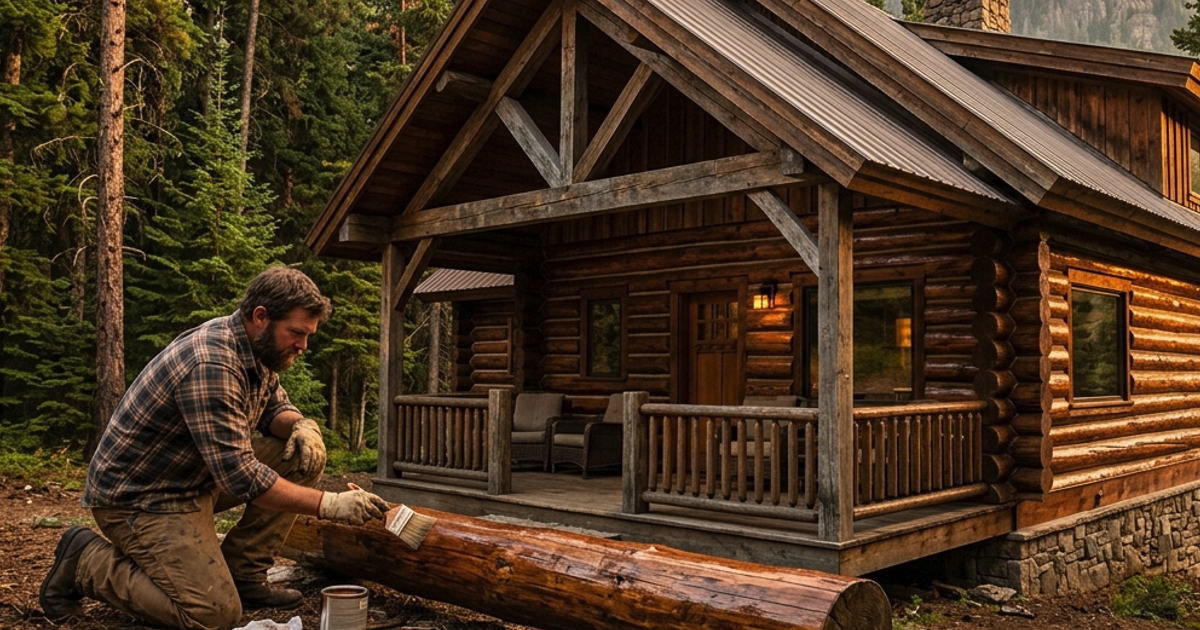
Heavy landscape timbers can absorb a significant volume of sealer on the first application, especially if the wood is dry and weathered. Do not be conservative with the first coat. Apply the sealer generously using a brush, roller, or pump sprayer, and work in manageable sections to avoid uneven absorption. Pay special attention to end grain on cut timbers, which absorbs sealer far more aggressively than face grain and is often the first point of moisture infiltration and decay.
Apply Multiple Coats Where Possible
For maximum protection on landscape timbers, two or more coats applied in a wet-on-wet or wet-on-tacky sequence will deliver substantially better penetration depth than a single heavy coat. Allow each coat to penetrate fully before evaluating whether the wood is still thirsty enough for additional material. When the surface begins to resist rather than absorb additional sealer, you have reached adequate saturation for that application. Wipe off any excess sealer that sits on the surface rather than being absorbed, as pooled sealer can dry tacky and attract debris.
Do Not Neglect Hidden and Low-Access Surfaces
This is one of the most important pro tips for retaining wall applications specifically. Before stacking and backfilling timbers, coat all faces including the back, bottom, and top surfaces that will be difficult or impossible to reach after installation. Pre-coating landscape timbers before they go into the ground is one of the highest-value steps you can take to extend the life of a retaining wall system by years or even decades.
Maintenance and Resealing Schedules for Landscape Wood Structures
Even the best sealer applied with perfect technique will need periodic reapplication to maintain its protective performance. Landscape timbers and retaining wall systems are exposed to conditions that accelerate sealer degradation faster than most above-grade wood surfaces.
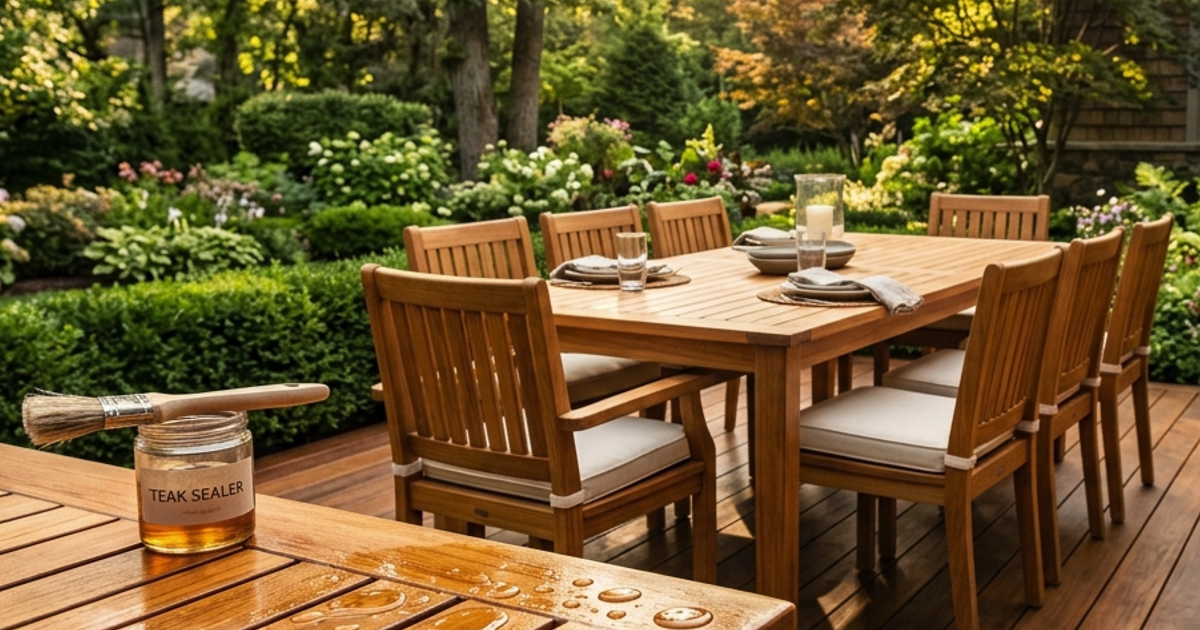
As a general guideline, landscape timbers in moderate climates with good drainage and adequate sun exposure should be resealed every two to three years. In climates with harsh winters, high rainfall, or dense shade that keeps the wood persistently damp, annual inspection and resealing every one to two years is more appropriate. The best indicator that resealing is needed is the water bead test. Sprinkle water on the surface of the timber. If water beads up and rolls off, the sealer is still performing. If water absorbs quickly into the wood, it is time to clean and reseal.
Catching the resealing window before the wood fully dries out and begins to gray and check again is far more effective and less labor-intensive than waiting until visible weathering damage has occurred. A proactive resealing schedule on landscape wood structures is one of the simplest and most cost-effective maintenance investments a property owner can make.
Final Thoughts From INSECO
Landscape wood structures deserve the same serious protection strategy that you would apply to a premium deck or timber frame structure. The combination of ground contact, moisture cycling, UV exposure, and biological threats makes railroad ties, retaining wall timbers, and landscape wood some of the most demanding surfaces in the outdoor environment. With proper preparation, the right penetrating sealer product, a generous application approach, and a disciplined resealing schedule, these structures can deliver decades of reliable performance and maintain their visual character for the long term.
INSECO's team of technical specialists is available to help contractors and homeowners select the right products and application strategies for any landscape wood project. Whether you are protecting a new retaining wall installation or reviving weathered timbers that have been neglected for years, the right specialty coating approach makes all the difference. Reach out to INSECO today to discuss your project and get the expert guidance that sets your work apart from the rest.