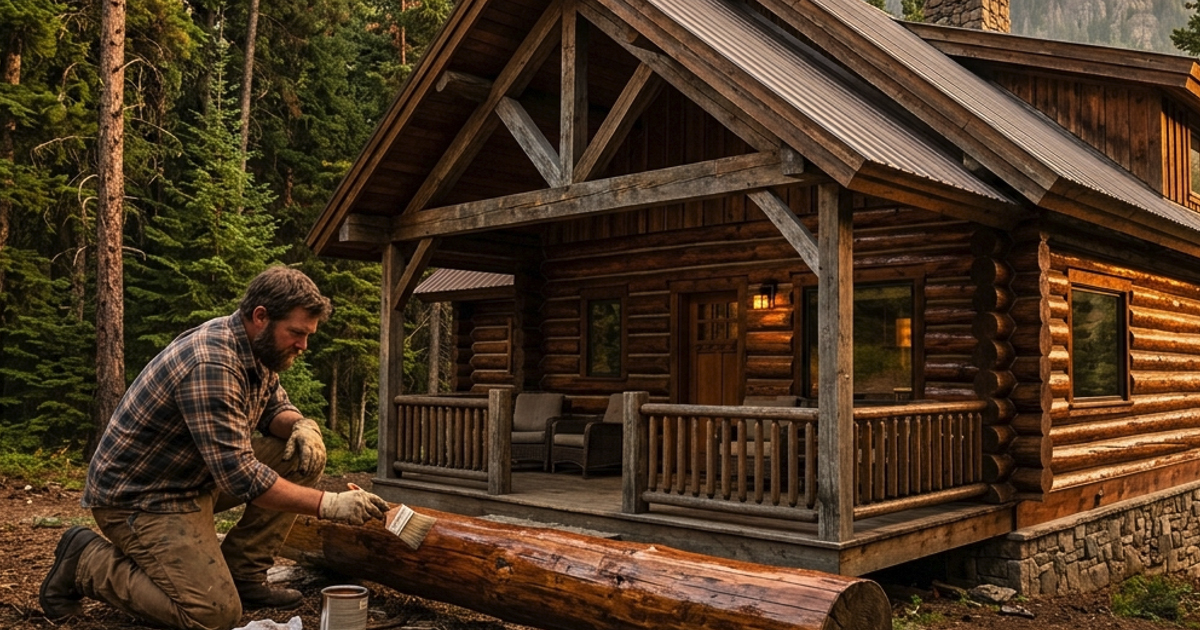



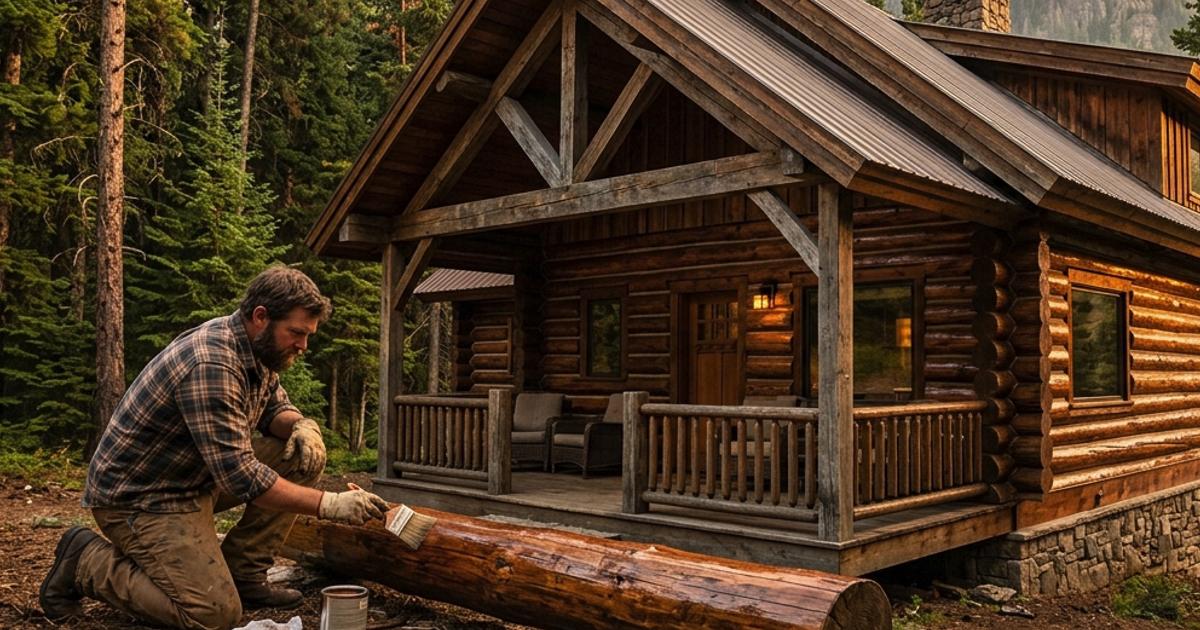

Log homes and timber frame structures represent some of the most beautiful and enduring architecture in residential and commercial construction. Whether you are the proud owner of a hand-hewn log cabin in the mountains or managing a large timber frame lodge for commercial hospitality, one truth remains constant: exposed wood of this scale demands serious, professional-grade protection. Without it, the same natural beauty that draws people to these structures becomes a liability, accelerating deterioration from UV exposure, moisture infiltration, insects, and mold growth.
At INSECO, we have worked with log home owners, restoration contractors, and timber frame builders for decades. The lessons learned from protecting these extraordinary structures go far beyond what applies to a standard deck or fence. This guide delivers those hard-won insights directly to you, with pro-level strategies for sealing and protecting log homes and heavy timber surfaces for the long haul.
Why Log Homes and Timber Frame Structures Demand a Different Approach
Most wood sealing guidance is written with dimensional lumber in mind, such as decking boards, fence pickets, or siding planks. Log homes and timber frame structures present an entirely different set of challenges that require a fundamentally different mindset before any coating is ever applied.
The Scale and Geometry Are Working Against You
Logs are round, irregular, and densely grained. That geometry creates check cracks, also known as radial splits, as the wood dries and settles over time. These checks are not structural failures, but they are critical infiltration points for water, fungi, and insects. A coating system that works beautifully on flat dimensional lumber may fail rapidly on log surfaces if it cannot flex and breathe with the wood as it moves seasonally.
Timber frame structures carry their own complexity. Large exposed timbers can be eight, ten, or even sixteen inches across, meaning moisture gradients within a single beam can be dramatic. The surface may appear dry while the interior is still releasing moisture vapor. Applying a non-breathable coating over actively drying timber is one of the most common and costly mistakes made on these projects.
The Stakes Are Higher
Replacing a damaged deck board costs a few dollars and a few minutes. Replacing a compromised log in a load-bearing wall or a rotted primary timber in a frame structure can cost tens of thousands of dollars and require engineering oversight. The economics of surface protection are always compelling, but nowhere more so than on log and timber structures where deferred maintenance becomes catastrophic repair almost without exception.
Pro Tips for Preparation: The Step That Determines Everything
Proper preparation on log and timber surfaces is not a preliminary step, it is the majority of the work. Rushing surface preparation on these structures is the single most reliable way to ensure coating failure within the first season.
Start With a Thorough Inspection
Before any cleaning or coating begins, walk the entire structure and document conditions. Look for existing coating failures such as peeling, bubbling, graying, or checking. Probe soft or discolored areas with a moisture meter and a firm object to identify rot pockets. Check chinking and caulking joints for separation and deterioration. Identify areas of heavy biological growth such as mildew, algae, or fungal staining. This inspection will define your scope of work and help you sequence tasks correctly.
Clean the Surface Aggressively and Correctly
Log and timber surfaces accumulate years of biological growth, oxidized wood fiber, failed coating residue, and environmental contamination. A simple rinse is not sufficient. Professional restoration of log homes typically involves a multi-stage cleaning process that may include:
- Media blasting with corncob or walnut shell media to remove old coatings and gray oxidized wood fiber without damaging healthy wood cells
- Chemical brightening with an oxalic acid-based wood brightener to restore the natural pH of the wood and open the grain for maximum coating penetration
- Pressure washing at appropriate pressures, typically between 500 and 1200 PSI depending on wood species and condition, to remove cleaning residues
- Complete dry time verification using a pin-type moisture meter before any coating is applied, targeting moisture content below 19 percent for most coating systems
Skipping the brightening step is an error many DIY applicators make. Log surfaces that are cleaned but not brightened often have elevated pH levels that can interfere with coating adhesion and accelerate tannin bleed-through in species like cedar, pine, and cypress.
Address Checks and Gaps Before Coating
Checks that are wider than approximately one-quarter inch should be treated with a flexible, paintable backer rod and caulk before sealing. Use a caulk specifically formulated for log home applications, one that remains permanently flexible and is compatible with your topcoat system. Never use standard latex or silicone caulk on log surfaces. These products do not move with the wood and will fail rapidly, creating worse infiltration points than the original unsealed check.
Pro Tips for Coating Selection and Application
Choosing the right coating for a log or timber frame structure requires understanding the exposure conditions, wood species, existing coating history, and the intended maintenance cycle for the property.
Penetrating Sealers vs Film-Forming Coatings
This is the fundamental choice in log home coating and the source of significant debate among contractors and owners. Penetrating sealers, like INSECO's premium WOOD Rx, work by entering the wood fiber and providing protection from within rather than sitting on top as a surface film. For log homes and timber frames, penetrating systems offer several significant advantages over film-forming coatings:
- They flex and move with the wood through seasonal expansion and contraction without cracking or peeling
- They allow moisture vapor to escape from within the log, preventing the subsurface moisture buildup that leads to coating failure and rot
- Reapplication is straightforward without the need for complete stripping, dramatically reducing long-term maintenance costs
- They enhance the natural beauty of the wood grain without creating the plastic appearance associated with high-build film coatings
Film-forming coatings can achieve impressive initial appearances but carry significant long-term risk on log structures. Once a film-forming coating begins to fail, moisture that infiltrates beneath the film has no escape path, accelerating rot and making the next recoat substantially more expensive because stripping is required before any new coating can be applied.
Application Techniques Specific to Log and Timber Surfaces
Applying coating to log surfaces requires different tools and techniques than flat surface application. Brush application remains the gold standard for log work because a quality brush forces coating into checks, grain irregularities, and end grain surfaces in ways that rollers and sprayers simply cannot match. That said, a hybrid approach is often most efficient on large structures.
A common professional workflow involves spraying a generous coat of penetrating sealer onto the log surface, followed immediately by back-brushing with a large natural bristle brush. This technique achieves the coverage efficiency of spray application with the penetration depth and complete surface contact of brush work. Pay particular attention to the top surfaces of horizontal logs, the check lines running along the length of logs, and all end grain exposure points, as these are the highest-risk areas for moisture infiltration.
Application Conditions Matter Enormously
Log homes are often located in environments with dramatic weather variability, mountainous terrain, lake regions, and coastal areas among them. Application conditions for specialty coatings must be managed carefully. Apply coatings only when surface temperatures are between 50 and 90 degrees Fahrenheit and relative humidity is below 85 percent. Avoid application in direct, intense sunlight on hot surfaces, as this accelerates surface drying before the penetrating sealer has time to enter the wood properly. Early morning application on east and north-facing walls, with afternoon work shifted to west and south elevations, is a practical workflow strategy that takes advantage of natural shading and optimal surface temperatures.
Establishing a Maintenance Cycle That Protects Your Investment
Log homes and timber frame structures that are properly coated and maintained are not high-maintenance properties. They are simply properties that require a consistent, predictable maintenance rhythm. The owners and managers who understand this truth get decades of beauty and structural integrity from their investment. Those who defer maintenance repeatedly face increasingly expensive restoration projects.
Annual Inspection as a Non-Negotiable Practice
Every log home and timber structure should receive a thorough visual inspection at least once per year, ideally at the end of winter when the effects of the cold and wet season are most visible. Look for areas where coating has worn thin, check lines that have opened, chinking or caulk that has separated, and any biological growth that indicates water is being held against the wood surface. Address these conditions promptly, as minor touch-up and maintenance caulking done annually is dramatically less expensive than allowing problems to compound into structural issues.
Understanding Your Recoat Interval
A quality penetrating sealer applied correctly to a properly prepared log or timber surface will typically maintain effective protection for two to five years depending on exposure conditions. South-facing walls in high UV environments may need attention every two to three years. North-facing or heavily shaded surfaces may perform for five years or longer before recoating is needed. The practical test is a simple water bead test: apply water to the surface and observe whether it beads and rolls off or absorbs. When absorption begins, it is time to clean and reapply. Do not wait until the wood begins to gray and weather, as that represents a period where UV degradation is actively damaging wood fiber with no protective coating in place.
INSECO's WOOD Rx is engineered precisely for this type of high-demand application, delivering deep penetration, outstanding UV resistance, and water repellency that stands up to the most challenging exposure environments. When paired with proper surface preparation and a consistent maintenance cycle, it is one of the most effective tools available for protecting the extraordinary investment that a log home or timber frame structure represents.
Whether you are tackling this project yourself or managing it as a professional contractor, the principles remain the same: prepare thoroughly, choose penetrating protection that breathes with the wood, apply with care in optimal conditions, and inspect regularly. That combination delivers results that protect both the structure and the character that makes these buildings worth protecting in the first place.