


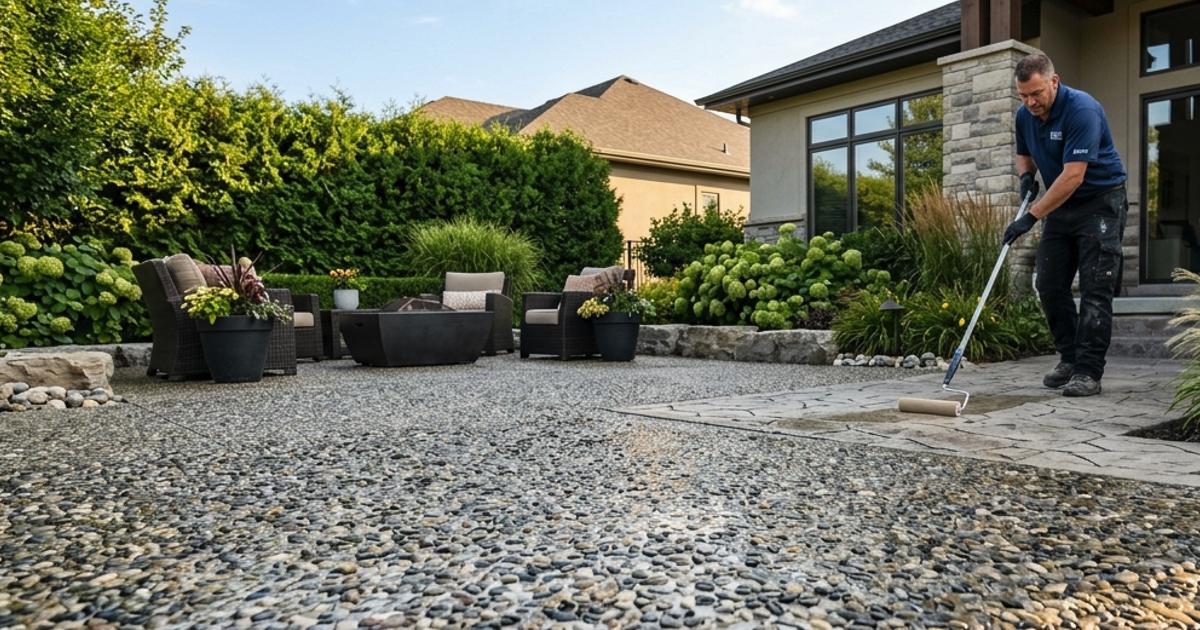

Decorative concrete has become one of the most popular surface choices for homeowners and commercial property managers alike. Whether you are working with exposed aggregate driveways, stamped concrete patios, or decorative pool decks, these surfaces represent a significant investment that demands proper protection. Unfortunately, many property owners treat decorative concrete the same way they treat plain gray slabs, and that mistake leads to premature deterioration, color fading, and costly repairs.
At INSECO, we work closely with both residential homeowners and professional contractors who understand that decorative concrete requires a more thoughtful sealing approach than standard concrete. The aggregate, texture, and colorants involved in decorative applications introduce unique variables that directly influence which coating you select, how you prepare the surface, and how you apply the sealer for maximum durability and visual impact.
This guide breaks down everything you need to know to protect decorative concrete the right way, with pro-level insight that goes well beyond the basics.
Why Decorative Concrete Needs Specialized Sealing Attention
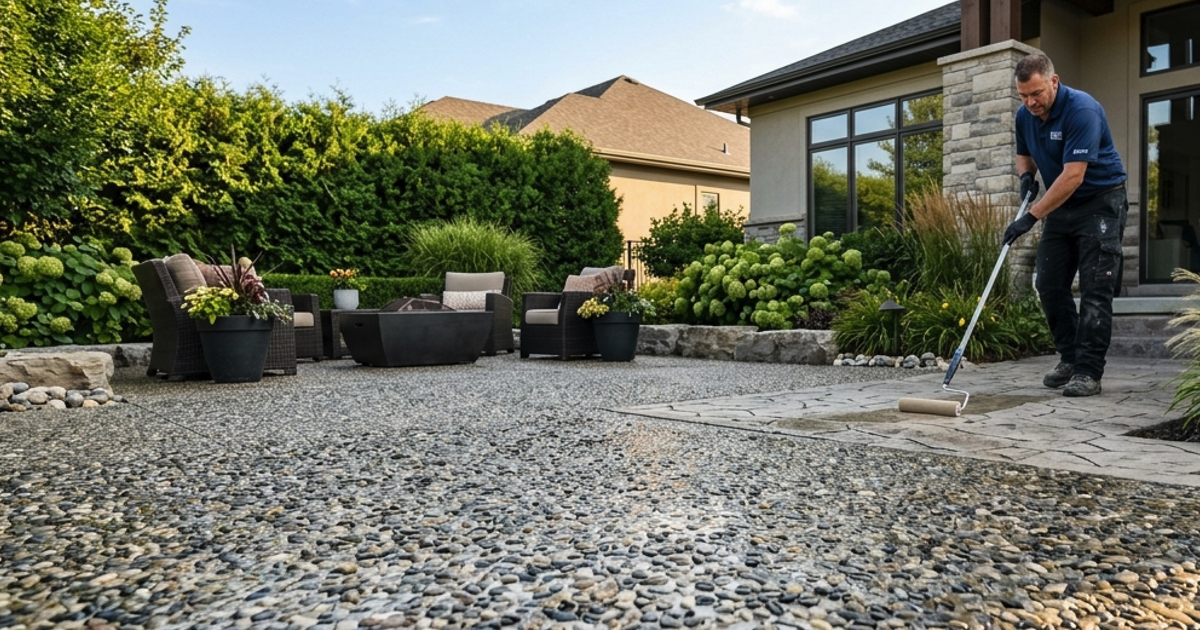
Standard concrete is porous, and decorative concrete is no different in that regard. What does change is the complexity of the surface. Exposed aggregate, for example, features a highly textured profile where small stones, pebbles, or glass chips are embedded into the concrete matrix and then the surface paste is removed to reveal them. That texture creates dramatically more surface area than a smooth slab, which means more entry points for moisture, oil, road salts, and contaminants.
Stamped concrete introduces another layer of complexity. The embossed patterns create deep relief channels and raised edges that trap debris and moisture if left unsealed. Color hardeners and release agents used during the stamping process also interact with certain sealer chemistries, making product selection critical to avoiding discoloration or adhesion failures.
The Risks of Leaving Decorative Concrete Unprotected
Unprotected decorative concrete faces an accelerated timeline of damage compared to plain slabs. Here is what happens when sealing is neglected or done improperly:
- Aggregate loss: The paste holding exposed stones begins to erode under freeze-thaw cycles and water intrusion, causing stones to loosen and pop out over time.
- Color fading: UV radiation breaks down integral pigments and color hardeners, turning vibrant decorative surfaces dull and washed out within just a few seasons.
- Efflorescence: Moisture moving through unsealed concrete carries soluble salts to the surface, creating white powdery stains that are difficult to remove once established.
- Freeze-thaw spalling: Water absorbed into the concrete expands during freezing, fracturing the surface from within and creating flaking, pitting, and cracking.
- Oil and stain absorption: Without a sealer barrier, oils, tannins from leaves, and other organic matter penetrate deeply and become nearly impossible to remove.
- Biological growth: Algae, mold, and mildew establish themselves in the textured recesses of decorative surfaces, creating slip hazards and aesthetic damage.
Choosing the Right Sealer for Decorative Concrete Applications
Sealer selection is where many projects go wrong. The wide variety of decorative concrete types means there is no single sealer that performs optimally across all of them. Understanding the key categories of concrete sealers and where each fits best is essential before you purchase a single drop of product.
Solvent-Based vs Water-Based Sealers
For decorative concrete, this distinction carries significant weight. Solvent-based acrylic sealers penetrate more aggressively into the concrete matrix and typically deliver a richer, more enhanced wet look that makes the colors and aggregates pop dramatically. They tend to form a harder, more durable film and are often the preferred choice for exposed aggregate driveways and stamped concrete that needs maximum visual enhancement.
Water-based sealers have improved substantially over recent years and offer advantages of their own. They produce lower VOC emissions, are easier to apply without specialized equipment, and are less prone to trapping moisture if the concrete has not fully cured or if ambient humidity is high at the time of application. For indoor decorative concrete applications or surfaces where a more natural, low-sheen look is desired, water-based formulas are often the better fit.
Penetrating Sealers for Low-Traffic Decorative Areas
Silane and siloxane penetrating sealers work differently from film-forming acrylics. Rather than creating a surface layer, they bond chemically within the pores of the concrete to repel water from the inside out. They do not enhance color and leave no visible sheen, but they provide outstanding moisture protection without altering the surface appearance. For decorative concrete in areas where the natural stone look is preferred without added gloss, penetrating sealers offer excellent long-term protection with minimal maintenance requirements.
The trade-off is that penetrating sealers offer little protection against oil staining and surface abrasion. For driveways and high-traffic areas, a film-forming topcoat is generally more appropriate.
Polyurethane and Epoxy Coatings for Maximum Durability
In high-traffic commercial applications where decorative concrete must withstand heavy foot traffic, vehicle loads, or frequent cleaning, polyurethane and epoxy-based coatings deliver superior abrasion resistance and chemical resistance compared to standard acrylics. These systems require more careful surface preparation and precise application technique but reward the effort with significantly extended service life.
Pro Application Tips for Decorative Concrete Sealing
Even the best sealer will underperform if applied incorrectly. Decorative concrete sealing has several application-specific nuances that every contractor and informed DIYer should understand before starting the job.
Surface Preparation Is Non-Negotiable
No sealing project succeeds without thorough surface preparation, and decorative concrete is especially demanding in this area. Begin by cleaning the surface completely using a pressure washer and a concrete-specific degreaser to remove all oil, dirt, biological growth, and prior sealer residue. Pay close attention to the recessed areas in stamped patterns and around exposed aggregate, where debris accumulates and old sealer tends to fail first.
If efflorescence is present, treat it with an appropriate efflorescence cleaner before sealing. Attempting to seal over active efflorescence will trap salts beneath the coating and guarantee premature failure. Allow the surface to dry completely before proceeding. For exposed aggregate, a thorough inspection to identify any loose stones should be completed, and loose material should be re-bonded or removed before sealing.
Timing and Weather Windows
Apply sealers to decorative concrete only when air and surface temperatures fall between 50 and 90 degrees Fahrenheit, with humidity below 85 percent and no rain forecast for at least 24 to 48 hours after application. Applying in direct sunlight on a hot surface is one of the most common mistakes made on decorative concrete projects. Heat causes solvent-based sealers to flash too quickly, trapping solvents beneath the film and creating whitening, bubbling, and adhesion failures.
Early morning application during warm months is almost always the best strategy. It allows you to work ahead of the rising heat, gives the sealer time to penetrate and begin curing before midday temperatures peak, and reduces the risk of direct sun exposure during the critical early curing window.
Application Method and Rate
For exposed aggregate surfaces, a pump sprayer is typically the most effective application tool. The texture makes roller application difficult and prone to creating uneven coverage, especially in the low points between aggregate stones. Apply thin, even coats rather than heavy single coats. Heavy application of film-forming sealers is one of the leading causes of whitening, peeling, and a plastic-looking finish that undermines the entire aesthetic purpose of decorative concrete.
For stamped concrete, a combination approach often works best. Spray the sealer across the surface first, then use a short-nap roller to work the product into the relief pattern and ensure complete coverage in the deeper impressions. Two thin coats applied at right angles to each other will consistently outperform a single heavy coat in both appearance and durability.
Reapplication Intervals and Long-Term Maintenance
Decorative concrete sealed with a quality acrylic sealer typically requires resealing every two to three years for exterior applications, depending on traffic levels, climate exposure, and the gloss level desired. Surfaces in harsh climates or with heavy vehicle traffic may need attention annually. A simple water bead test tells you when resealing is needed. If water no longer beads and instead absorbs into the surface, the sealer has reached the end of its effective life and reapplication should be scheduled promptly.
Between sealing cycles, keep decorated concrete surfaces clean by sweeping regularly and cleaning spills quickly before they have a chance to penetrate through the aging sealer layer. Avoid using de-icing salts on decorative concrete in winter, as chloride-based products accelerate coating breakdown and attack the concrete beneath. Sand is a far safer alternative for winter traction on sealed decorative surfaces.
The INSECO Difference: Specialty Coatings Built for Performance
Since 1996, INSECO has built its reputation on developing specialty coatings that outperform the broader market through refined formulations and deep technical knowledge. Our team works directly with contractors and property owners to match the right product to every surface condition, application environment, and performance expectation. Whether you are protecting a small residential exposed aggregate walkway or sealing thousands of square feet of stamped concrete on a commercial property, INSECO provides the technical assistance and premium product quality that translates directly into results you can see and measure.
Protecting decorative concrete is not just about maintaining appearance. It is about preserving value, extending the useful life of a significant investment, and avoiding the far greater cost of replacement. With the right sealer, applied at the right time using the right technique, decorative concrete surfaces can maintain their beauty and structural integrity for decades. The pro tips outlined here give you the foundation to do exactly that.