



Concrete masonry unit walls, commonly known as CMU or concrete block walls, are among the most durable structural elements in both residential and commercial construction. They are tough, fire-resistant, and built to last decades. But despite their rugged reputation, they are far from impervious to the forces of nature. Without proper sealing, CMU walls absorb moisture like a sponge, develop efflorescence, support mold and mildew growth, and slowly deteriorate from the inside out. Understanding how to properly protect these surfaces is a skill that separates informed property owners from those who face expensive structural repairs down the road.
At INSECO, we have spent nearly three decades working with specialty coatings designed for exactly these kinds of demanding surfaces. Whether you are a homeowner protecting a basement wall or a commercial contractor tasked with preserving an entire warehouse block structure, these pro tips will help you get the job done right the first time.
Why CMU and Concrete Block Walls Need Special Attention
Concrete block walls are inherently porous. The manufacturing process creates microscopic voids throughout the material, and the mortar joints between blocks add additional pathways for water infiltration. This porosity is the root cause of nearly every problem that plagues unprotected masonry walls.
The Moisture Problem
Water is the primary enemy of masonry surfaces. When moisture penetrates into a CMU wall, it does not simply sit there. It expands and contracts with temperature fluctuations, pushing against the internal structure of the block. Over time, this cycle of freezing and thawing, known as spalling, causes the surface to crack, flake, and break apart. In climates with harsh winters, this process can visibly damage a wall within just a few seasons of neglect.
Efflorescence: The White Stain No One Wants
One of the most common complaints associated with unsealed concrete block walls is efflorescence. This is the white, chalky residue that appears on the surface of masonry when water moves through the block, dissolves soluble salts, and deposits them on the exterior as it evaporates. While efflorescence itself is not structurally harmful in its early stages, it is a clear indicator that moisture is migrating through your wall, and that migration is causing damage you may not yet be able to see.
Mold, Mildew, and Biological Growth
Persistent moisture creates an ideal environment for mold and mildew. On interior CMU walls such as those in basements, storage facilities, or commercial buildings, biological growth presents both a health concern and an aesthetic problem. A quality penetrating sealer can dramatically reduce the moisture content within the wall, cutting off the conditions that allow biological growth to take hold.
Pro Tips for Preparing CMU Walls Before Sealing
Preparation is everything when it comes to coating masonry surfaces. Skipping or rushing through the prep process is the single most common reason that sealers fail prematurely on concrete block walls. The surface must be clean, dry, and structurally sound before any coating is applied.
Start With a Thorough Cleaning
Remove all dirt, debris, oil, and biological growth before applying any sealer. A pressure washer set to an appropriate PSI for masonry surfaces is your best starting tool. For walls with existing efflorescence, use a diluted muriatic acid solution applied carefully according to manufacturer instructions, then rinse thoroughly. Allow the surface to dry completely before proceeding. On porous CMU walls, this drying period can take longer than you might expect, sometimes 24 to 72 hours depending on ambient conditions and the depth of moisture saturation.
Repair Cracks and Damaged Mortar Joints
No sealer can bridge a structural crack or compensate for failed mortar joints. Before you seal, inspect the entire wall for cracks, spalls, and deteriorated mortar. Tuckpoint any failing mortar joints and fill cracks with an appropriate masonry patching compound. Allow all repairs to cure fully before applying your coating. Sealing over unrepaired damage traps moisture and accelerates further deterioration rather than preventing it.
Check for Previous Coatings
If the wall has been previously painted or sealed, you need to determine what type of product was used and whether it is still adhering properly. Peeling, flaking, or bubbling coatings must be removed before any new sealer is applied. Applying a new coating over a failing old one is one of the most common and costly mistakes made in masonry maintenance. Test for existing coatings by splashing water on the surface. If it beads up, a previous sealer is still present. If it absorbs immediately, the surface is bare and ready to accept a new coating.
Choosing the Right Sealer for Concrete Block Walls
Not all sealers are created equal, and CMU walls require products specifically formulated to handle their unique challenges. The right choice depends on whether you are dealing with an interior or exterior wall, the level of moisture exposure, and the aesthetic result you are trying to achieve.
Penetrating Sealers vs. Film-Forming Coatings
For most CMU wall applications, a penetrating silane or siloxane-based sealer is the preferred choice. These products work by absorbing into the porous matrix of the block and chemically bonding with the substrate to repel water from within. They do not form a film on the surface, which means they will not peel, bubble, or trap moisture behind the coating. They preserve the natural appearance of the masonry while providing excellent long-term protection.
Film-forming coatings such as elastomeric masonry coatings or epoxy-based systems are better suited for situations where you need to bridge hairline cracks, provide a color finish, or create a vapor barrier on interior walls. These products offer excellent performance when properly applied but require more rigorous surface preparation and a surface that is free of any moisture migration pressure from behind.
Consider the Direction of Water Pressure
One of the most critical factors in choosing a sealer for CMU walls is understanding which direction the water pressure is coming from. Positive-side waterproofing is applied to the face that water is pushing against, while negative-side products are applied to the interior surface of a wall where hydrostatic pressure is pushing moisture through. Using the wrong product for the wrong side of the wall is a guaranteed path to coating failure. Always identify your moisture source before selecting your product.
Application Pro Tips for Maximum Performance
Even the best sealer on the market will underperform if it is not applied correctly. CMU surfaces are highly textured and porous, which means application technique matters enormously.
- Apply in ideal temperature conditions. Most masonry sealers perform best when applied in temperatures between 50°F and 90°F with low to moderate humidity. Avoid application in direct sunlight on hot days, as rapid evaporation can prevent proper penetration into the substrate.
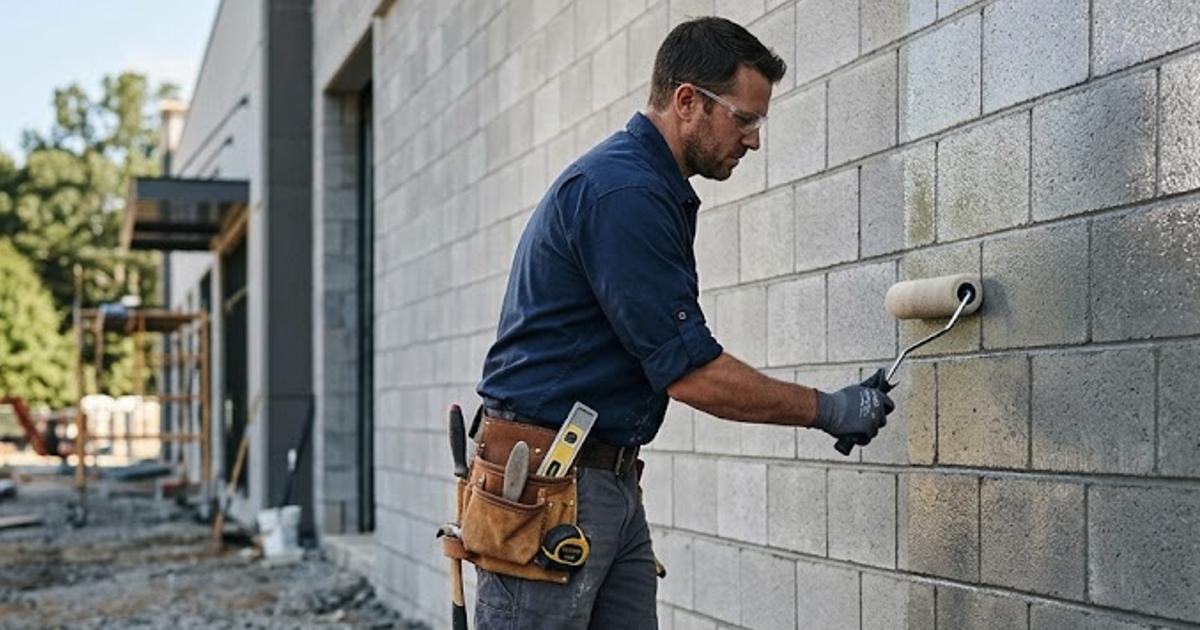
- Use a heavy-nap roller or brush for textured surfaces. The rough, open texture of concrete block demands a roller with enough nap to reach into the voids and irregularities of the surface. A 3/4-inch or 1-inch nap roller is typically appropriate. Sprayers can also be used effectively but require a second pass with a brush or roller to work the product into the surface.
- Apply two coats for best results. A single coat is rarely sufficient on CMU walls. Apply a first coat and allow it to penetrate fully, then apply a second coat before the first has fully cured, typically within the product's specified recoat window. This technique, known as a wet-on-wet or back-to-back application, ensures full saturation of the substrate.
- Do not over-apply. More is not always better with penetrating sealers. Excess product that cannot penetrate the substrate will sit on the surface and form an uneven, sticky film. Follow manufacturer coverage rates carefully and resist the urge to apply heavy coats.
- Seal mortar joints with extra attention. Mortar joints are typically more porous than the block face and represent a primary pathway for water infiltration. Make sure your application method ensures complete saturation of all mortar joints, not just the flat face of the block.
- Allow proper cure time before exposure. Resist the temptation to expose a freshly sealed wall to rain or pressure washing before the sealer has fully cured. Check the manufacturer's specifications for cure times under your specific ambient conditions.
Maintenance and Reapplication
Sealed CMU walls are significantly easier to maintain than unsealed ones, but they are not maintenance-free. Penetrating sealers on masonry surfaces typically remain effective for three to ten years depending on the product, the level of exposure, and the quality of the original application. Exterior walls in harsh climates or those subject to constant moisture exposure will need more frequent attention than interior walls in controlled environments.
Inspect sealed CMU walls annually for signs of water infiltration, new efflorescence, or surface damage. The water bead test mentioned earlier is an excellent quick diagnostic. If water no longer beads on the surface and instead absorbs quickly, it is time to consider reapplication. Clean the surface thoroughly and apply a fresh coat of sealer according to the original product specifications. Because penetrating sealers do not build a film, reapplication is typically straightforward without the need for aggressive stripping or surface removal.
Protecting concrete block and CMU walls is an investment that pays significant dividends over the life of your structure. By understanding the unique challenges these surfaces present, choosing the right sealer for your specific conditions, and following professional application techniques, you can dramatically extend the life of your masonry and avoid the substantial costs associated with moisture damage and structural deterioration. At INSECO, we remain committed to providing the technical guidance and premium specialty coatings that professionals and property owners need to get these projects right.