



The garage floor is one of the most abused surfaces in any residential or commercial property. It endures vehicle traffic, oil spills, chemical exposure, freeze-thaw cycles, and heavy foot traffic year after year. Yet it remains one of the most overlooked surfaces when it comes to proper coating and protection. Whether you are a homeowner looking to upgrade a worn slab or a commercial contractor bidding on a fleet facility, understanding the right approach to concrete garage floor coatings can mean the difference between a surface that lasts decades and one that fails within a single season.
At INSECO, we have spent nearly three decades refining specialty coating solutions for demanding surfaces. The garage floor presents a unique set of challenges that require both the right product and the right process. This guide breaks down everything you need to know to get it right the first time.
Why Garage Floor Coatings Deserve More Attention Than They Get
Most property owners do not think about their garage floor until something goes wrong. Cracks appear, stains set in permanently, the surface becomes dusty and porous, or moisture starts pushing up from below. By that point, the remediation process becomes significantly more expensive and labor-intensive than proper upfront protection would have been.
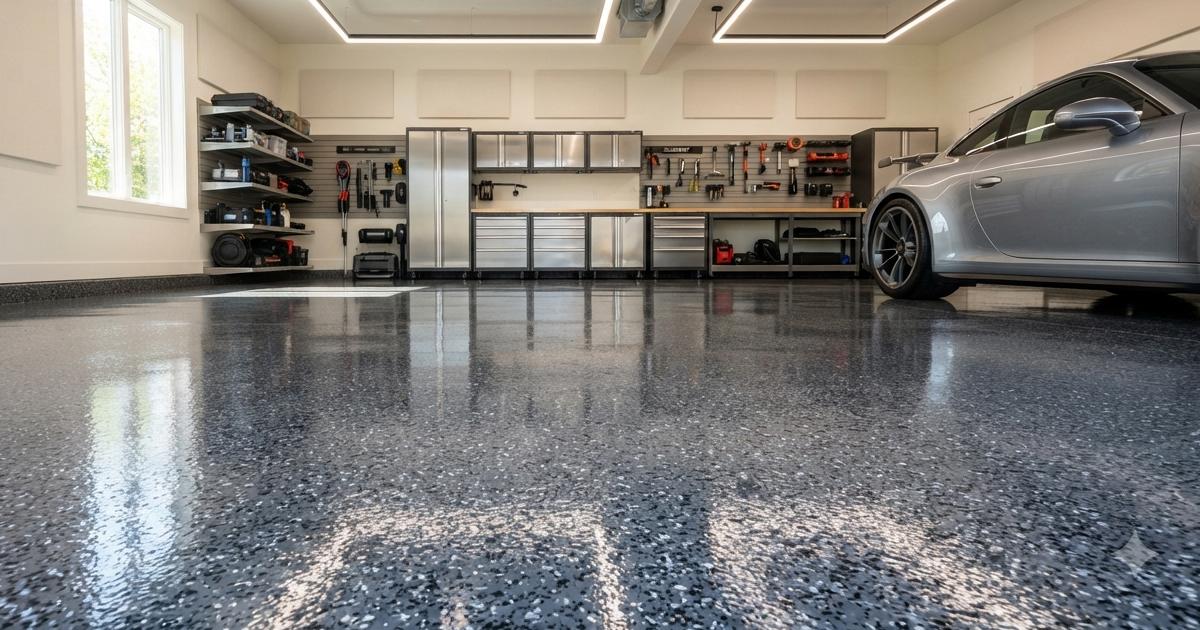
A properly coated garage floor does far more than look good. It creates a sealed, impermeable barrier that resists oil, grease, road salts, battery acid, and cleaning chemicals. It reduces dusting caused by concrete degrading from the surface down. It also reflects light, improving visibility inside the garage, and makes the space far easier to clean and maintain.
The Unique Demands of a Garage Floor Environment
Concrete garage floors are subjected to conditions that are genuinely harsh. Hot tire pickup is one of the most common causes of coating failure on garage floors. When a vehicle is driven in after highway travel, the hot tires can bond to certain coating types and literally peel the finish away when the car is moved. Understanding this risk before selecting a coating product is essential.
In addition, garage floors are often at or below grade, making them susceptible to hydrostatic pressure from groundwater. Moisture vapor transmission through the slab is a leading cause of coating delamination, and this is a factor that must be evaluated before any coating is applied.
Pro Tips for Selecting the Right Garage Floor Coating
Not every coating is appropriate for every garage floor situation. There are several key distinctions to understand before choosing a product or system.
Know Your Concrete Before You Coat It
The first step that professionals take, and that too many DIYers skip entirely, is testing the concrete itself. Before any coating goes down, the slab needs to be evaluated for moisture content, surface profile, existing sealers or coatings, and structural integrity. Skipping this step is one of the leading causes of premature coating failure in garage applications.
A basic water droplet test can help identify whether a previous sealer is still present. If water beads on the surface rather than absorbing, there is likely an existing coating or densifier that must be addressed before new product can adhere properly.
Understand the Performance Tiers of Available Coatings
Garage floor coatings generally fall into several categories, each with different performance characteristics, application requirements, and cost profiles. Understanding these distinctions helps you match the right system to the specific demands of the environment.
- Penetrating Sealers: These soak into the concrete and chemically react with the substrate to create a dense, protective barrier within the slab itself. They do not change the appearance significantly but provide excellent moisture resistance and are ideal as a base layer in multi-coat systems.
- Acrylic Coatings: A cost-effective option for light-duty residential garages, acrylics offer good UV resistance but are less durable under heavy traffic and hot tire exposure. Best suited for garages that see limited vehicle use.
- Epoxy Coatings: A two-component system that delivers exceptional adhesion, chemical resistance, and compressive strength. Epoxy is the most commonly specified product for commercial and high-traffic residential garage floors. However, it is sensitive to moisture during application and can amber or yellow with UV exposure over time.
- Polyurethane Topcoats: Often applied over epoxy as a finish coat, polyurethane provides UV stability, flexibility, and additional abrasion resistance. A two-coat epoxy plus polyurethane system is widely considered the industry benchmark for high-performance garage floor protection.
- Polyaspartic Coatings: A newer technology offering very fast cure times, excellent UV resistance, and strong performance in temperature extremes. Polyaspartic systems can be applied and returned to service in a single day, making them highly attractive for commercial operations where downtime is costly.
Factor In the Application Environment
Temperature and humidity at the time of application have a direct impact on coating performance. For most garage floor coating systems, application temperatures should remain between 50 and 90 degrees Fahrenheit. Concrete surface temperature matters more than air temperature. A slab sitting in direct sun can easily reach temperatures well beyond what the coating chemistry can tolerate, leading to flash cure, poor adhesion, and surface bubbling.
Apply coatings during early morning hours when surface temperatures are moderate and stable. Avoid applying any coating product if rain is expected within 24 hours, or if temperatures are forecast to drop below the product minimum after application begins.
Pro Tips for Surface Preparation on Garage Floors
If there is one non-negotiable principle in professional coating application, it is this: the preparation determines the outcome. No amount of product quality can compensate for inadequate surface preparation. On garage floors, this truth is amplified by the inherent challenges of concrete as a substrate.
Mechanical Preparation Is Almost Always Necessary
For anything beyond a light-duty penetrating sealer, mechanical surface preparation is strongly recommended for garage floors. Diamond grinding or shot blasting opens the pores of the concrete, removes laitance (the weak surface layer of fine particles that forms during concrete curing), and creates a surface profile that coating products can mechanically bond to.
A common target profile for garage floor coating systems is a Concrete Surface Profile (CSP) of 2 to 3, which produces a texture roughly equivalent to medium-grit sandpaper. This profile provides sufficient anchor for most epoxy and polyurethane systems without being so aggressive that it requires excessive product to fill the valleys.
Address Cracks and Joints Before Coating
Active cracks and control joints must be addressed before coating begins. Rigid coatings applied directly over active cracks will eventually telegraph those cracks to the surface as the concrete continues to move. Flexible crack fillers or caulk systems should be used in control joints, while structural cracks may require epoxy injection or polyurea repair products before surface coating proceeds.
Conduct a Thorough Moisture Test
Moisture vapor emission rate testing using ASTM F1869 calcium chloride test kits or in-situ relative humidity probes per ASTM F2170 will tell you whether the slab is dry enough for coating. Most epoxy systems require emission rates below 3 pounds per 1,000 square feet per 24 hours. Exceeding this threshold significantly increases the risk of delamination and blistering. If moisture is an issue, a moisture-mitigation primer or vapor barrier coating must be applied before the primary system.
Application Techniques That Separate Good Results From Great Ones
Even with the right product and a properly prepared surface, application technique plays a critical role in the final outcome. Here are the most important practices to follow during the application phase.
Mix Precisely and Allow Proper Induction Time
Two-component systems like epoxies require precise ratio mixing. Deviating from the manufacturer-specified mix ratio compromises the chemical crosslinking process that gives the coating its strength. After mixing, many epoxy products benefit from an induction period, typically 15 to 30 minutes, during which the components begin reacting before application. Skipping induction time can affect adhesion and gloss development.
Work in Wet-Edge Sections
Garage floors are large, flat surfaces that can expose lap lines and roller marks if not handled carefully. Work in manageable sections and always maintain a wet edge by moving at a pace that prevents the leading edge from beginning to cure before the next section is applied alongside it. Use a 3/8-inch nap roller for most epoxy systems and apply with even, overlapping strokes to ensure uniform coverage.
Broadcast Decorative Aggregate at the Right Time
If you are incorporating color flake or quartz aggregate broadcast for aesthetics and additional slip resistance, timing the broadcast correctly is essential. The material must be scattered into the wet coating immediately after application and before any skinning begins. Apply broadcast aggregate generously, almost to the point of excess, and then sweep off or vacuum the loose material after the coating has fully cured before applying a clear topcoat.
A properly executed garage floor coating system is an investment that returns dividends in durability, cleanliness, and professional appearance for years. Whether you are protecting a single-car residential garage or a multi-bay commercial facility, the principles remain the same. Choose the right product for the environment, prepare the surface with the rigor the job demands, and apply with discipline and attention to detail. At INSECO, we are here to support both homeowners and contractors with technical guidance and premium specialty coating solutions developed through decades of real-world application experience. When you are ready to take your garage floor from neglected slab to durable asset, start with the right knowledge and the right products.