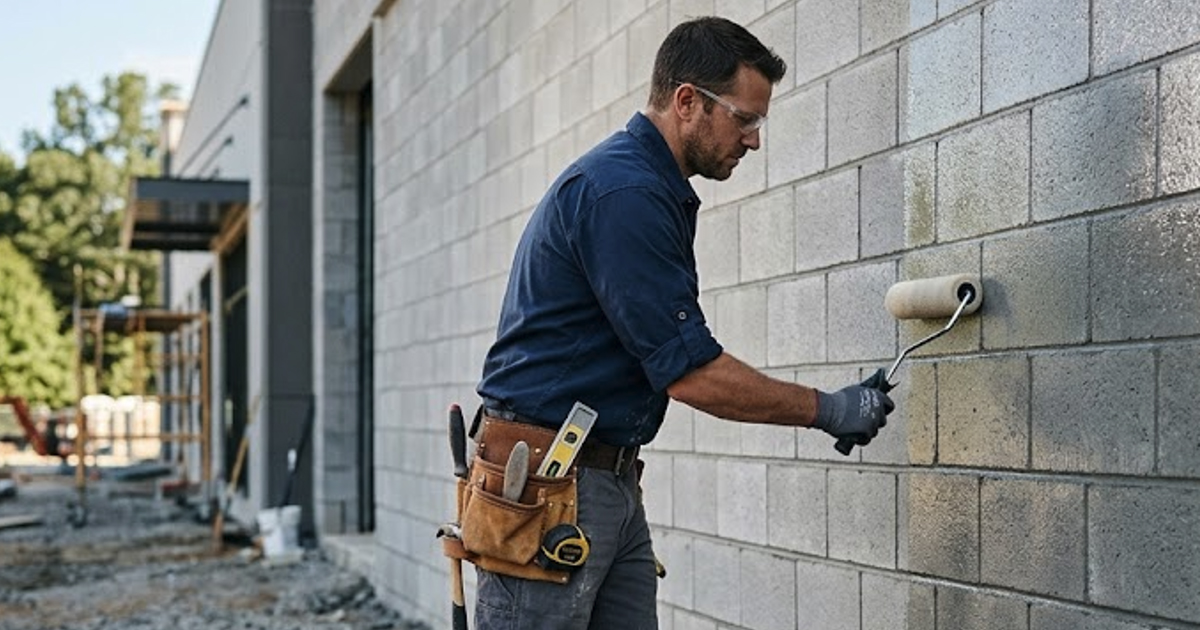




When a coating fails, most people look at the product itself or the way it was applied. In reality, many coating issues begin well before application ever starts. Planning, evaluation, and environmental awareness all play a critical role in determining whether a coating system performs as intended or begins breaking down prematurely.
One of the most overlooked steps in any coating project is surface evaluation. Substrate condition, previous coatings, contamination, and structural movement can all impact performance if they aren’t properly identified ahead of time. Applying even the highest-quality coating over an incompatible or compromised surface often leads to adhesion loss, blistering, or uneven wear over time.
Environmental exposure also plays a major role in long-term coating success. UV exposure, moisture intrusion, chemical contact, and temperature fluctuations affect different materials in different ways. Without matching the coating system to its real-world exposure conditions, premature degradation becomes more likely regardless of application quality.
Another common issue arises from mismatched expectations. Coatings are designed with specific performance limits, maintenance cycles, and service environments in mind. When those limits aren’t understood, coatings are often pushed beyond their intended use, leading to unnecessary repairs or replacement.
Successful coating performance is the result of informed decision-making at every stage — from evaluation and selection to application and ongoing maintenance. Understanding where failures truly begin allows projects to be approached strategically, reducing long-term costs and extending service life.
At INSECO INC., coating systems are evaluated as part of a complete performance solution, not just a surface finish. That approach helps ensure coatings perform as expected under real-world conditions.