



Most homeowners and even some seasoned contractors think of sealers and coatings as simple protective layers — something you brush on and forget about. But the reality is far more sophisticated. Specialty coatings are the product of decades of chemistry research, materials science, and real-world performance testing. Understanding how they actually work at a molecular and mechanical level gives you a decisive advantage when selecting, applying, and maintaining coatings on any surface.
At INSECO, we have been formulating premium specialty coatings since 1996, and one of the most consistent things we observe is that informed applicators achieve dramatically better results than those who treat coatings as a commodity product. When you understand the science, you make smarter decisions at every stage of a project — from surface preparation to final cure.
How Coatings Bond to Surfaces at the Molecular Level
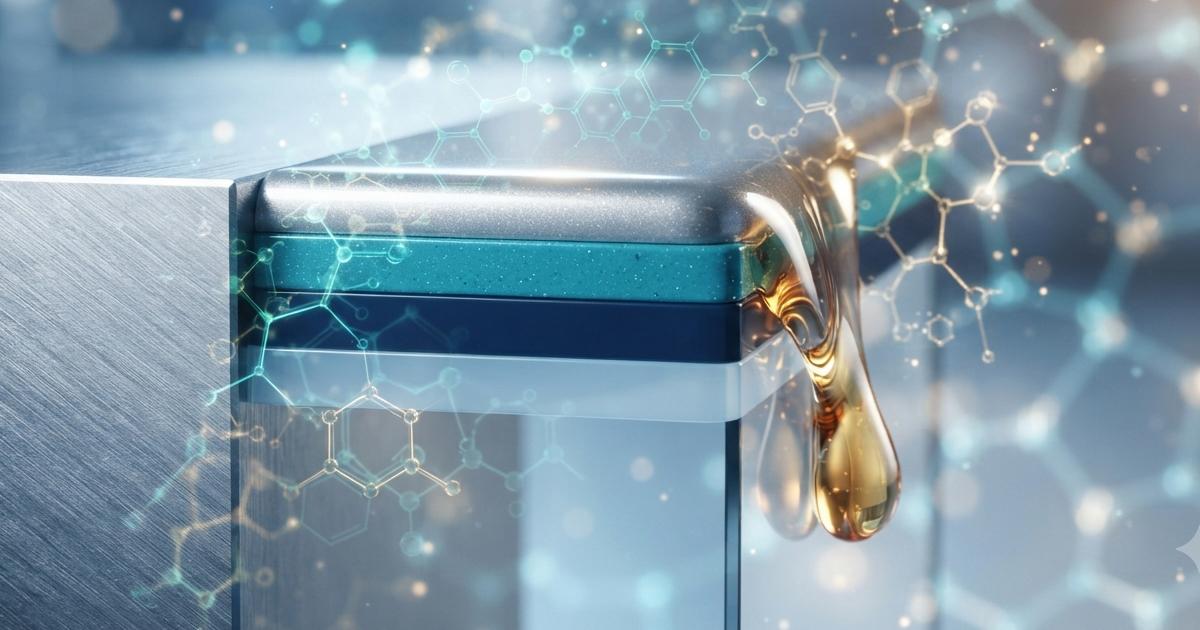
The first thing to understand is that a coating does not simply sit on top of a surface. A high-quality specialty coating penetrates, bonds, and in many cases chemically integrates with the substrate beneath it. This is what separates a premium product like WOOD Rx from a generic store-brand sealer that merely films over the surface without true adhesion.
Mechanical Adhesion vs. Chemical Adhesion
There are two primary ways a coating adheres to a surface. Mechanical adhesion occurs when a coating penetrates the microscopic pores, cracks, and irregularities of a surface and hardens inside them, essentially locking itself into place. This is particularly relevant for porous substrates like concrete, brick pavers, and open-grain wood species. Chemical adhesion occurs when the polymer molecules in the coating form actual chemical bonds with the substrate or with a primer layer beneath. The most durable coating systems rely on both mechanisms simultaneously.
This is precisely why surface profile and cleanliness matter so much. Contaminants like oils, old coatings, efflorescence, and biological growth physically block the pathways through which a coating achieves adhesion. No amount of premium chemistry can overcome a poorly prepared surface. Mechanical adhesion requires open pores, and chemical adhesion requires clean, reactive surfaces.
The Role of Polymers and Resins
The backbone of any specialty coating is its resin or polymer system. Common resin types used in quality coatings include acrylics, polyurethanes, epoxies, silicones, and siloxanes, each with distinct performance characteristics. The resin determines how the coating behaves after curing — its hardness, flexibility, UV resistance, water repellency, and vapor transmission rate.
For wood surfaces, flexibility is critical. Wood expands and contracts with humidity and temperature fluctuations, and a brittle coating will crack and peel as the substrate moves beneath it. WOOD Rx is engineered with a polymer system that moves with the wood rather than against it, which is one of the defining reasons for its exceptional field performance and longevity.
Understanding Curing Chemistry and What It Means for Your Project
Drying and curing are terms that are often used interchangeably, but they describe fundamentally different processes — and confusing them leads to premature failures in the field.
Evaporation vs. Chemical Cross-Linking
A coating that dries does so primarily through solvent or water evaporation. As the carrier medium leaves the film, the coating consolidates and becomes touch dry. However, a coating that cures undergoes a chemical reaction — typically cross-linking of polymer chains — that transforms the coating into a fully networked, hardened film with its designed performance properties fully activated.
Many two-component coatings, epoxies, and polyurethane systems are not truly functional until this cross-linking is complete, which can take anywhere from 24 hours to several days depending on ambient conditions. Applying traffic, water exposure, or a topcoat before full cure is one of the most common causes of coating system failure in both residential and commercial applications.
How Temperature and Humidity Influence Cure Chemistry
Chemical reactions are temperature-dependent. Most specialty coating cures accelerate in warmer conditions and slow dramatically in cold environments. Below certain threshold temperatures — often around 50°F for water-based systems — cure reactions may stall entirely, leaving the coating in a vulnerable semi-cured state that has poor adhesion and inadequate resistance properties.
Humidity adds another layer of complexity. Water-based coatings require sufficient evaporation of the water carrier to allow film formation. High humidity slows this evaporation significantly. On the other hand, moisture-cure systems — like certain urethane sealers — actually require atmospheric moisture to drive the curing reaction. Understanding what type of chemistry your specific coating relies on is essential to planning application timing correctly.
How Coatings Protect Against Moisture, UV, and Biological Threats
The ultimate purpose of a specialty coating is protection, and different coatings achieve this through distinct mechanisms depending on the threats they are designed to resist. A sophisticated understanding of these mechanisms helps you select the right product for your specific exposure environment.
Moisture Resistance and Vapor Management
Water damage is the single most destructive force acting on most unprotected surfaces. For wood, moisture drives swelling, warping, cracking, and eventually rot. For concrete, water intrusion enables freeze-thaw cycle damage, rebar corrosion, and surface spalling. For natural stone and brick pavers, moisture enables staining, efflorescence, and biological colonization.
Quality sealers do not simply create a waterproof barrier — they manage moisture movement intelligently. A breathable penetrating sealer on wood or stone allows water vapor to escape from within the substrate while blocking liquid water intrusion from outside. This is critical because trapping moisture beneath a vapor-impermeable coating can cause adhesion failure and accelerate the very damage the coating was meant to prevent.
UV Protection Mechanisms
Ultraviolet radiation breaks down organic materials at the molecular level through a process called photodegradation. In unprotected wood, UV radiation breaks down lignin — the structural polymer that holds wood fibers together — causing graying, surface erosion, and eventually deep structural damage. In coatings themselves, UV exposure can cause chalking, fading, and embrittlement over time.
Premium coatings combat UV degradation through two primary strategies. The first involves UV absorbers, which are chemical compounds that capture UV photons and release them as harmless heat energy. The second involves hindered amine light stabilizers (HALS), which interrupt the free radical chain reactions that UV radiation triggers within the coating film. Together, these systems significantly extend the service life of both the coating and the substrate beneath it.
Biological and Chemical Resistance
Mold, mildew, algae, and bacteria are persistent threats to organic surfaces and even to some inorganic ones. Quality coatings incorporate biocides that inhibit microbial colonization on the coating surface. However, it is important to understand that these biocides deplete over time through weathering and cleaning, which is one reason why periodic maintenance and resealing are necessary even on surfaces that appear visually intact.
Chemical resistance is equally important in environments exposed to road salts, pool chemicals, cleaning agents, and automotive fluids. Epoxy and polyurethane-based systems offer the highest chemical resistance, which is why they dominate in garage floor and industrial applications.
Pro Tips for Applying This Knowledge on Your Next Project
Understanding the science behind coatings translates directly into better application decisions. Here are actionable takeaways that professional applicators use to optimize results:
- Always match the resin system to the substrate movement characteristics. Rigid epoxies are appropriate for concrete and masonry, while flexible acrylic and penetrating systems are better suited to wood surfaces that expand and contract seasonally.
- Respect cure windows before exposing coated surfaces to traffic or weather. Touch-dry does not mean fully cured. Always consult product technical data sheets for full cure times before returning surfaces to service.
- Monitor dew point, temperature, and humidity before and during application. These variables directly control evaporation rates, cure chemistry, and adhesion quality. Do not rely on guesswork or general rules of thumb.
- Choose penetrating sealers for breathable, vapor-managing protection on natural surfaces. Film-forming coatings offer excellent protection but must be matched carefully to substrates where vapor transmission is a concern.
- Plan reapplication intervals based on UV exposure and traffic load, not just calendar time. South-facing surfaces in high-UV regions may need attention twice as often as shaded or north-facing equivalents.
- Test adhesion before assuming a coating system has performed correctly. A simple tape pull test after full cure can identify adhesion problems early, before they become visible failures.
- Do not mix coating chemistries from different manufacturers without compatibility testing. Incompatible resin systems can cause delamination, wrinkling, or complete adhesion loss — all of which are avoidable with proper planning.
The difference between a coating project that lasts three years and one that lasts fifteen often has nothing to do with how hard someone worked during application. It comes down to how well they understood the materials they were working with. At INSECO, our technical team is available to help both homeowners and commercial contractors navigate these decisions with confidence. When you understand the science, you get the results.