




Outgassing is one of the most misunderstood causes of coating failure in concrete applications. It can turn an otherwise well-prepared, properly mixed, and carefully applied system into a surface riddled with pinholes, bubbles, and craters. Even experienced professionals can be caught off guard when a slab that looked perfectly sound suddenly releases trapped air during application.
Understanding why outgassing happens — and how to prevent it — separates routine applicators from true coating professionals. At INSECO INC., we emphasize that success in coating projects begins long before the first gallon is poured. Managing the behavior of the substrate is just as critical as selecting the right product.
What Is Outgassing and Why Does It Happen?
Concrete is not a solid mass. It is a porous material filled with microscopic air pockets and capillaries. When temperature rises, the air trapped within those pores expands. If a coating is applied while the slab temperature is increasing, that expanding air pushes upward through the wet film.
As the air escapes, it creates bubbles. When those bubbles burst, they leave behind pinholes or craters in the cured coating. These defects are not merely cosmetic — they can compromise chemical resistance, reduce durability, and create pathways for moisture intrusion.
Outgassing is most aggressive when:
-
Concrete is warming (morning sun hitting a slab)
-
The slab retains internal moisture
-
The coating is applied too thick
-
Surface preparation leaves open pores without proper sealing
Why Temperature Timing Matters More Than Most Contractors Realize
One of the most effective ways to prevent outgassing is controlling application timing. The safest window for coating concrete is when the slab temperature is falling, not rising.
Late afternoon or early evening applications are often safer than early morning starts, especially for exterior slabs exposed to direct sunlight. When temperatures are dropping, air inside the concrete contracts rather than expands, dramatically reducing the risk of bubble formation.
It’s not just ambient air temperature that matters — slab temperature is the critical variable. Infrared thermometers are inexpensive tools that can prevent expensive failures.
The Role of Surface Preparation in Preventing Outgassing
Aggressive surface preparation methods like grinding or shot blasting open up the concrete’s pore structure. While this improves mechanical adhesion, it also increases the potential for air release.
That’s why properly applying a penetrating primer is essential. A low-viscosity primer can soak into the pores and help seal them before the main coating system is installed. Skipping or rushing this step often leads to pinholes that appear hours after application.
Professionals who understand this balance treat priming not as a formality, but as a structural component of the coating system.
Moisture and Vapor Transmission: The Hidden Contributors
Moisture inside a slab doesn’t just affect adhesion — it intensifies outgassing. As moisture warms, vapor pressure increases, contributing to bubble formation beneath the coating film.
Testing for moisture vapor emission rates before application is not optional in high-performance environments. Even if the surface appears dry, internal vapor movement can still create failures.
Managing moisture properly ensures that the coating performs as designed, rather than reacting unpredictably after installation.
Application Techniques That Reduce Risk
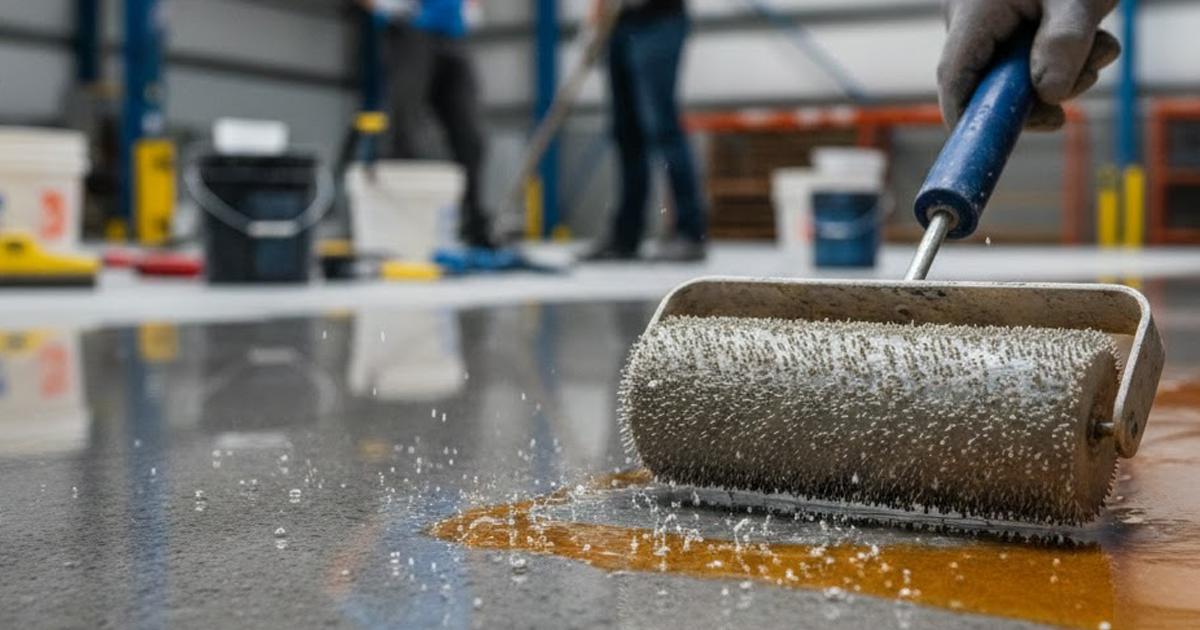
Application method also plays a role. Rolling too aggressively can trap air in the coating itself. Applying material too thick can prevent bubbles from breaking before cure. Using spiked rollers in self-leveling systems can help release trapped air before the film sets.
Thin, controlled, evenly distributed coats perform better than rushed, heavy passes. Precision in application protects both aesthetics and performance.
The Professional Difference
Outgassing is not a product defect. It is a substrate behavior issue. Recognizing that difference is what separates reactive troubleshooting from proactive prevention.
By understanding temperature cycles, slab conditions, moisture dynamics, and proper priming strategies, contractors can dramatically reduce defects and improve long-term performance.
At INSECO INC., we believe that coating success is rooted in knowledge. The more you understand how materials interact beneath the surface, the more predictable — and profitable — your results become.