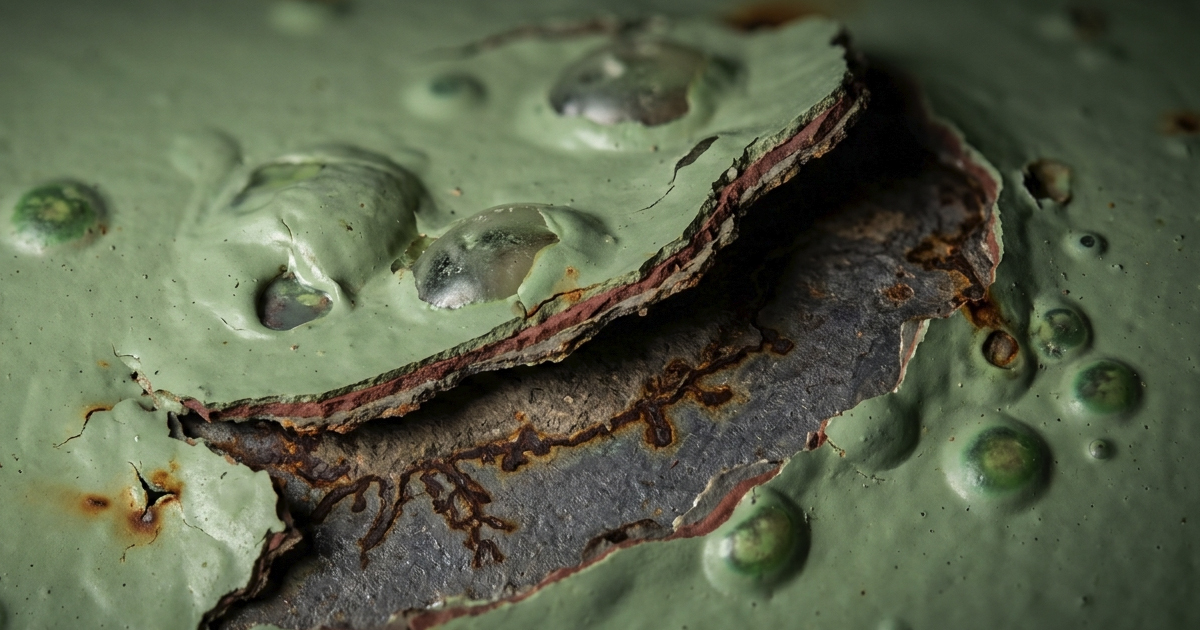




Most coating failures do not announce themselves all at once. They begin quietly, beneath the surface, in ways that are easy to dismiss or misread. By the time visible peeling, cracking, or discoloration appears, the underlying failure has often been developing for weeks or even months. Understanding how to recognize early internal failure signals is one of the most valuable skills any contractor, applicator, or property owner can develop when working with specialty coatings.
At INSECO, our technical team fields calls every day from professionals and homeowners who are surprised by coating failures that seemed to appear out of nowhere. In almost every case, a closer look reveals that the warning signs were present long before the surface showed obvious distress. This guide is designed to help you understand what those early signals look like, what causes them, and how INSECO Specialty Coatings are formulated to perform when the correct process is followed from the start.
Understanding the Difference Between Surface Failure and Subsurface Failure
Not all coating failures originate at the surface level. Some failures begin within the coating film itself, while others start at the bond line between the coating and the substrate. Distinguishing between these two categories is essential for diagnosing the problem accurately and applying the right corrective action.
Film-Level Failures
Film-level failures occur within the coating layer itself. These can include internal cracking, micro-fracturing, oxidation of the binder, and loss of film integrity from UV exposure or thermal cycling. In wood coatings like INSECO's flagship product WOOD Rx, film-level failures are often triggered by applying too heavy a coat in a single pass, trapping solvents or moisture inside the film before it can fully cure. The result may not be visible immediately, but over time the film becomes brittle, loses its flexibility, and begins to crack or delaminate.
Bond-Line Failures
Bond-line failures occur at the interface between the coating and the substrate. These are often caused by surface contamination, inadequate surface preparation, moisture vapor transmission from below, or a mismatch between the coating chemistry and the substrate porosity. Bond-line failures are particularly deceptive because the coating surface may look intact while adhesion is already breaking down underneath. A simple adhesion test, such as a crosshatch tape pull, can reveal bond-line failure before it becomes a full-scale delamination problem.
Early Warning Signs You Should Never Ignore
Learning to read early warning signs allows you to intervene before minor issues become major failures. INSECO recommends periodic inspections of coated surfaces, especially after the first full seasonal cycle following application. Here are the key indicators that a coating may be failing from the inside out.
Subtle Discoloration or Graying
When a coating begins to lose its protective integrity, the substrate beneath it often begins to show through in subtle ways. On wood surfaces, this may appear as a faint graying or darkening in isolated spots. This can indicate that the coating has become permeable in those areas, allowing moisture and UV radiation to reach the substrate. If left unaddressed, these spots will expand and the coating will continue to degrade from within.
Soft or Spongy Texture When Pressed
A properly cured coating should feel firm and solid underfoot or to the touch. If a coated surface feels soft, spongy, or slightly gives when pressure is applied, it may indicate that the coating has failed to cure properly or that moisture has become trapped beneath the film. This is especially common on horizontal surfaces like decks and concrete flatwork that are exposed to standing water or condensation. INSECO's technical team recommends using a moisture meter to evaluate substrate moisture levels in any area that feels abnormal before applying additional product.
Loss of Sheen in Isolated Areas
Uneven or localized loss of sheen can indicate that the coating film is breaking down at a microscopic level in specific areas. This is sometimes caused by varying substrate porosity pulling the coating unevenly during cure, or by early chalking caused by UV degradation of the binder resin. While it may look like a simple aesthetic issue, localized sheen loss is often a precursor to adhesion failure and should be investigated rather than ignored.
Micro-Cracking at Edges or Corners
Edges, corners, and end-grain surfaces are the most vulnerable areas on any coated substrate. These areas experience the greatest thermal movement and are the first to reveal stress in the coating film. Fine, hairline cracks along edges or at transitions between surfaces can indicate that the coating has lost its flexibility and is beginning to fail from within. On wood, this is often a sign that the penetrant portion of the coating system has been compromised and that moisture is beginning to enter the substrate from the exposed ends.
What INSECO Recommends When Early Failure Signals Are Detected
Catching a failure early means you have options. The corrective action required depends on how far the failure has progressed, the type of substrate involved, and which INSECO product system was applied. The following steps outline the general approach INSECO recommends when early internal failure signals are identified.
- Stop and assess: Do not apply additional coats over a failing surface. Doing so will seal in the problem and accelerate the overall failure.
- Perform an adhesion test: Use a crosshatch tape test or a simple scratch test to determine whether the coating is still bonding to the substrate or has become detached at the bond line.
- Check for moisture: Use a calibrated moisture meter to evaluate substrate moisture content in affected areas. Elevated moisture levels will need to be addressed before any corrective coating work can proceed.
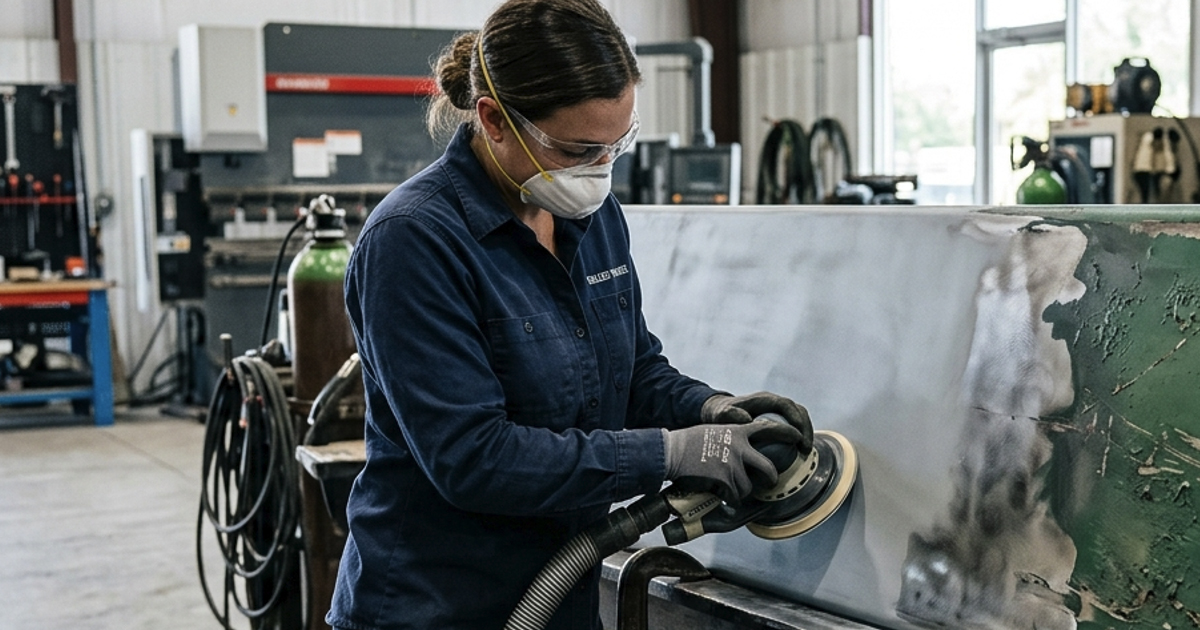
- Clean the surface thoroughly: Remove any chalking, contamination, or loosely adhered coating material before evaluating next steps.
- Contact INSECO technical support: Our team can help you interpret what you are seeing and recommend the most efficient path forward based on the specific product, substrate, and conditions involved.
- Document the failure pattern: Photographs and notes about where failures are concentrated, how large the affected areas are, and what conditions the surface has been exposed to will help both you and our technical team reach an accurate diagnosis faster.
When Spot Repair Is Appropriate
In cases where failure is limited to isolated areas and the surrounding coating is still well-bonded and intact, spot repair may be a viable option. This involves carefully feathering in new product over the affected area after proper preparation. INSECO recommends consulting with our technical team before attempting spot repairs to ensure the new coating will integrate properly with the existing system and that the underlying cause of the failure has been resolved.
When Full Removal and Reapplication Is Required
If adhesion failure is widespread, if moisture infiltration has compromised the substrate, or if the existing coating has become so degraded that it cannot serve as a suitable base for new product, full removal and reapplication is the only appropriate solution. Attempting to coat over a systemically failing surface will always result in a shortened service life and repeated failures. INSECO products are designed to deliver long-term performance on properly prepared substrates, and the investment in correct preparation will always deliver a superior return.
How INSECO Specialty Coatings Are Designed to Resist Internal Failure
INSECO has spent nearly three decades refining its product formulations to address the root causes of coating failure rather than simply masking symptoms. Our specialty coatings for wood, concrete, brick pavers, and natural stone are engineered with premium binder systems that maintain flexibility across a wide range of temperatures, allowing the coating to move with the substrate rather than against it. This flexibility is one of the key reasons WOOD Rx consistently outperforms competing wood sealers in real-world exposure conditions.
In addition to flexibility, INSECO formulations are designed to manage moisture vapor transmission intelligently. Rather than acting as a completely impermeable barrier, which can trap moisture and lead to internal pressure within the coating film, our products allow controlled breathability while still providing robust surface protection. This balance is critical in wood applications where seasonal moisture cycling is unavoidable.
Our technical assistance team is available to help you understand the specific performance characteristics of each INSECO product and how to get the most from your coating system in your particular environment and conditions. Whether you are a seasoned contractor applying coatings professionally or a homeowner protecting a significant surface investment, INSECO is committed to providing the knowledge and support you need to achieve results that last.
If you are seeing signs of early coating failure on a surface treated with any INSECO product, or if you are evaluating a surface before your first INSECO application, do not hesitate to reach out to our technical team. Early action almost always leads to better outcomes, lower costs, and longer-lasting protection.