



When professionals invest in premium specialty coatings like those offered by INSECO, the focus is often on proper application technique, substrate preparation, and environmental conditions. However, one critical and frequently overlooked phase of any coating project is what happens to the product before it ever touches the surface. How coatings are transported to the job site and stored during the project window can have a significant impact on product performance, consistency, and long-term results.
At INSECO, we have spent decades working directly with contractors, applicators, and facility managers to help them understand that product care does not begin at application — it begins the moment the product leaves our facility. This guide walks you through the best practices for protecting your INSECO specialty coatings during transport and on-site storage so that every application delivers the premium performance you expect.
Why Transport and Job Site Conditions Matter More Than You Think
Specialty coatings are precision-engineered formulations. Products like WOOD Rx and other INSECO offerings are developed with carefully balanced chemistry that can be disrupted by temperature extremes, excessive vibration, prolonged UV exposure, or improper sealing. Even a brief exposure to the wrong conditions can affect viscosity, film-forming properties, and cure behavior — all without any visible indication that the product has been compromised.
When a coating performs poorly in the field, most applicators immediately examine their technique or the substrate. Rarely does anyone consider whether the product itself was altered during the hours or days before it was opened. That blind spot leads to costly rework, customer dissatisfaction, and unnecessary product waste.
The Hidden Risks of Ignoring Pre-Application Handling
Consider the following scenario: a pallet of coating product is loaded into a dark-colored transport vehicle on a hot summer afternoon. Temperatures inside the vehicle easily climb above 120°F. The product sits in that heat for two hours during transit. By the time it reaches the job site and is applied, the resin system within the coating has already been stressed. The result may be poor adhesion, altered dry time, or inconsistent sheen — all problems that could have been entirely prevented.
This is not a rare edge case. It is a common situation that INSECO's technical support team hears about regularly. The good news is that prevention is straightforward once you understand the guidelines.
Best Practices for Transporting INSECO Specialty Coatings
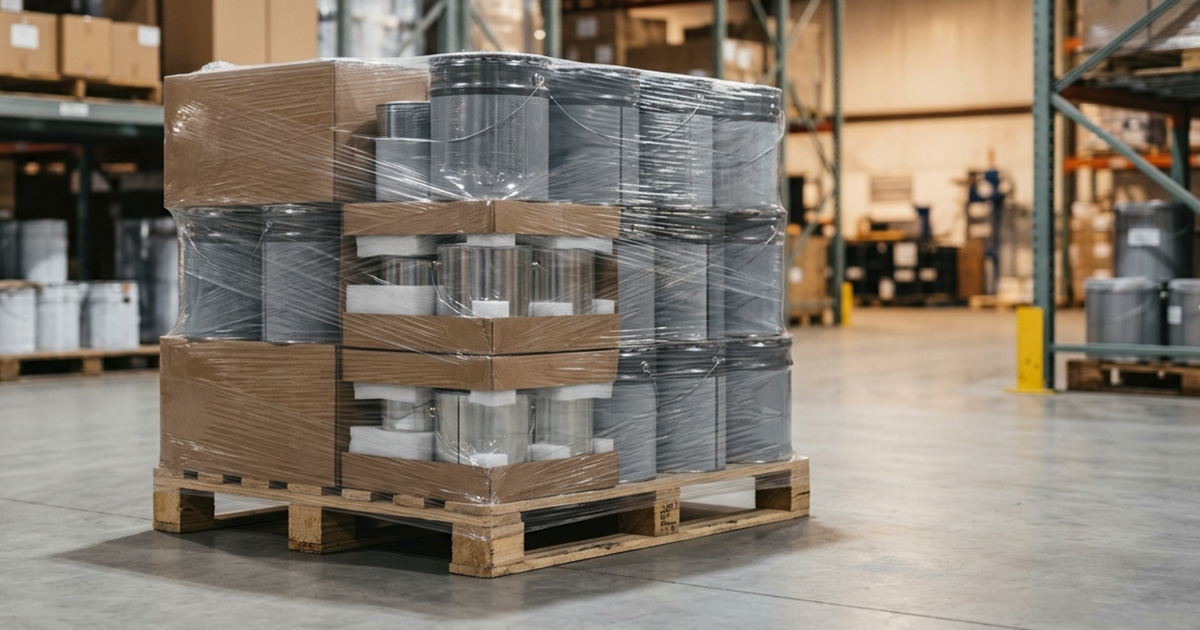
Transporting coatings safely requires attention to temperature control, physical protection, and proper securing of containers. Whether you are moving a single gallon or an entire pallet, these principles apply across the board.
Temperature Management During Transit
INSECO specialty coatings should be transported within the temperature range specified on the product's Technical Data Sheet (TDS). As a general rule, most water-based and solvent-based coatings should be kept between 50°F and 90°F during transport. Exceeding these thresholds — in either direction — risks product degradation.
- Avoid leaving coating products in enclosed vehicles during extreme heat. Cargo areas in vans and trucks can reach temperatures well above ambient outdoor levels.
- During cold weather, do not allow water-based products to freeze. Freezing permanently damages the emulsion and the product cannot be recovered.
- Use insulated cargo blankets or climate-controlled vehicles when transporting products in temperatures outside the recommended range.
- Plan your delivery timing to minimize how long product sits in a vehicle. Early morning deliveries are preferable in summer months.
- When transporting by open truck bed, cover the product with a tarp to protect from direct sun exposure and sudden rain.
Physical Protection of Containers
Containers that arrive at the job site dented, punctured, or with compromised lids are an immediate risk. Beyond the obvious hazard of spills, damaged containers allow air infiltration, which accelerates skinning and oxidation in both solvent-based and water-based systems. Always inspect containers upon loading and again upon arrival at the job site. Any container with a compromised seal should be flagged and assessed before use.
Secure pallets and individual containers so they do not shift during transport. Repeated jostling and vibration can cause certain coating systems to partially separate or aerate, which may affect film quality. Use strapping and non-slip matting when carrying product in vehicles without built-in load restraints.
Proper Job Site Storage to Preserve Coating Performance
Even after safe transport, product performance can be jeopardized by poor job site storage conditions. A job site is not a controlled warehouse environment. It presents a unique set of challenges including temperature swings, humidity fluctuations, dust, and unauthorized access to materials. A disciplined approach to on-site storage protects your investment and ensures the coating performs exactly as the INSECO formulation was designed to.
Temperature and Shade Control on the Job Site
Store all INSECO coating products in a shaded, well-ventilated area away from direct sunlight. UV radiation from the sun degrades container integrity over time and raises internal temperatures even in products stored in opaque containers. A portable storage tent or shaded staging area on the job site is a worthwhile investment for any project lasting more than a single day.
If you are working in regions with significant overnight temperature drops, bring water-based products indoors or store them in a climate-controlled area when work stops for the day. Products exposed to near-freezing temperatures overnight, even once, should be carefully inspected before use and when in doubt, you should contact INSECO's technical support team for guidance before proceeding.
Maintaining Container Integrity Between Uses
Every time a container is opened, it is exposed to air, humidity, and potential contamination. Between uses during an active project, always reseal containers tightly. For partially used containers, consider pressing plastic wrap directly against the surface of the coating before sealing the lid. This minimizes air contact and slows the skinning process, particularly in solvent-based systems.
Label all opened containers with the date they were first opened. INSECO technical data sheets specify open container working windows, and tracking this information prevents you from unknowingly using product that has degraded past its usable threshold. Never pour unused coating back into an original container if it has been contaminated with dried material, debris, or thinners that were not part of the original formulation.
Keeping the Storage Area Organized and Documented
On larger projects involving multiple INSECO coating products — primers, base coats, topcoats, or specialty finishes — a disorganized storage area leads to application errors. Products applied out of sequence or mixed incorrectly are a leading cause of field failures that are entirely preventable.
Create a simple labeling system for your job site storage area. Group products by application stage and clearly mark which coatings are for which substrate zones. Keep your INSECO product data sheets accessible in the storage area so that anyone on the crew can quickly verify they have the correct product in hand before application begins.
When in Doubt, Contact INSECO Technical Support
INSECO has built its reputation not only on the quality of its coatings but on the depth of its technical assistance. If you arrive at a job site and suspect that a product may have been compromised during transport or storage — whether due to temperature exposure, container damage, or extended time in adverse conditions — do not guess. Contact the INSECO technical support team before applying the product.
Our team can walk you through a series of simple field assessments to determine whether the product is still within acceptable performance parameters. In some cases, a product that appears questionable may be fully usable with minor adjustments. In others, replacement is the right call. Either way, catching the issue before application rather than after saves time, money, and the surface you worked hard to prepare.
Protecting your INSECO specialty coatings from the moment they leave our facility to the moment they touch your substrate is not an afterthought — it is part of the professional standard that separates average results from exceptional ones. Handle your coatings with the same care you give to the surfaces they protect, and the performance will speak for itself.