



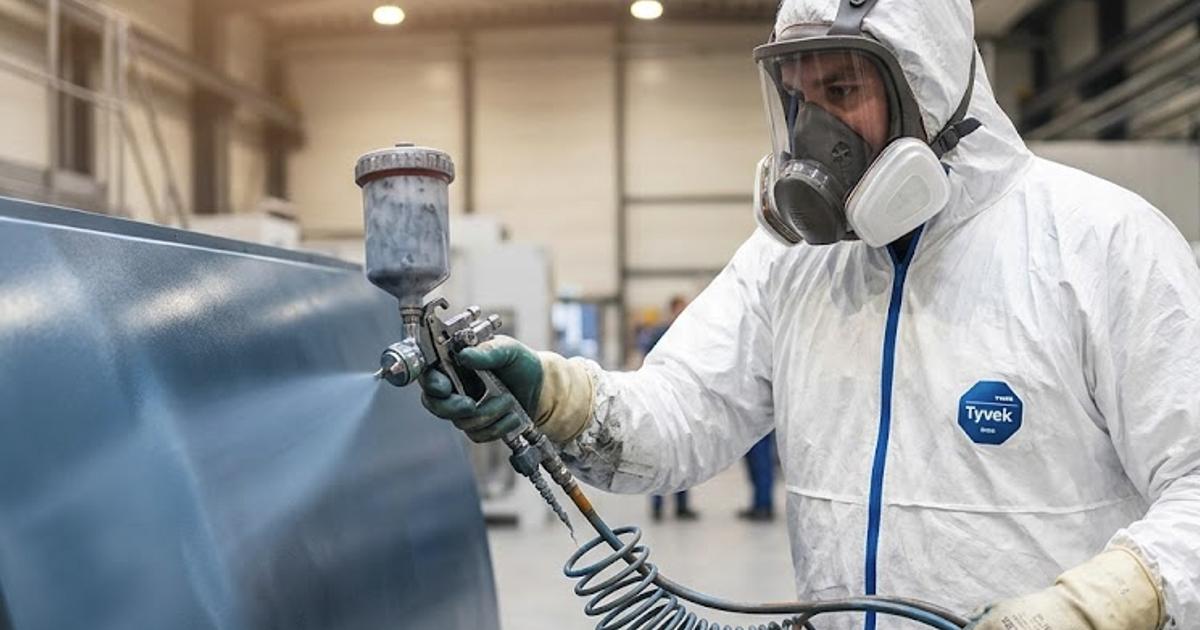

In industrial coating projects, achieving a high-quality finish is only part of the equation. Efficiency, material control, and minimizing waste all play major roles in keeping projects profitable and maintaining consistent application standards. One of the most common challenges contractors face is excessive overspray, which can quietly increase material costs, create cleanup issues, and reduce overall coating performance.
At INSECO INC., understanding how to properly control spray patterns, equipment setup, and environmental conditions can make a significant difference in both coating quality and operational efficiency.
Why Overspray Matters More Than Many Realize
Overspray occurs when coating particles fail to land properly on the intended surface. Instead, the material drifts into the air or settles on surrounding areas. While small amounts may seem unavoidable, excessive overspray can quickly become expensive on large-scale projects.
Common problems caused by overspray include:
- Increased material consumption
- Uneven film thickness
- Poor transfer efficiency
- Additional labor for cleanup
- Contamination of nearby surfaces
- Reduced visibility during application
- Environmental compliance concerns
In controlled industrial environments, even minor overspray issues can affect neighboring equipment, finished surfaces, or sensitive components.
Start With Proper Spray Gun Setup
One of the most effective ways to reduce waste begins before the first coat is even applied. Incorrect spray gun settings are often responsible for poor atomization and unnecessary material drift.
Key setup factors include:
Fluid Pressure
Excessive pressure can create overly fine particles that remain airborne longer and fail to properly adhere to the substrate.
Tip Size Selection
Using the wrong spray tip for the coating viscosity can lead to inconsistent spray patterns and wasted material.
Fan Width Adjustment
An improperly adjusted fan pattern may create uneven coverage or excessive edge buildup.
Distance From Surface
Holding the gun too far from the substrate allows coating particles to dry mid-air before reaching the target surface.
Environmental Conditions Play a Major Role
Ambient conditions greatly influence coating behavior during spray applications. Air movement, temperature, and humidity can all affect how coatings travel and adhere.
To reduce overspray:
- Avoid spraying in excessive wind conditions
- Monitor ventilation airflow carefully
- Control temperature fluctuations
- Maintain proper humidity ranges
- Minimize turbulent air movement near the application zone
Even indoor industrial facilities can experience airflow disruptions caused by ventilation systems, open doors, or nearby equipment operation.
Improve Transfer Efficiency With Proper Technique
Operator technique remains one of the largest variables in coating efficiency. Consistent movement and proper overlap patterns help ensure even coverage while minimizing waste.
Professional applicators typically focus on:
- Maintaining consistent gun speed
- Keeping uniform spray distance
- Using 50% overlap patterns
- Triggering correctly at pass starts and stops
- Avoiding excessive arcing motions
Small inconsistencies repeated across large surfaces can dramatically increase material consumption over the course of a project.
The Importance of Equipment Maintenance
Poorly maintained equipment can contribute heavily to overspray and inconsistent finishes. Worn tips, clogged filters, damaged hoses, and pressure irregularities often create unstable spray patterns.
Routine maintenance should include:
- Inspecting spray tips regularly
- Cleaning filters and strainers
- Checking hose integrity
- Verifying pressure consistency
- Monitoring pump performance
- Replacing worn components before failure occurs
Preventive maintenance not only improves coating quality but also helps reduce downtime and unexpected material loss.
Material Savings Add Up Quickly
Reducing overspray is not simply about cleaner applications — it directly affects profitability. Improving transfer efficiency by even a small percentage can create substantial savings over multiple industrial projects.
Benefits may include:
- Lower coating consumption
- Faster cleanup times
- Improved project timelines
- More consistent film builds
- Reduced environmental waste
- Better overall finish quality
For high-performance industrial coatings, proper application efficiency becomes even more important due to the higher cost of specialty materials.
Precision and Control Drive Better Results
Industrial coating success depends on far more than simply applying material to a surface. Precision, environmental awareness, equipment calibration, and operator technique all work together to create reliable long-term performance.
At INSECO INC., understanding the science behind efficient coating applications helps contractors and facility managers achieve stronger results while minimizing waste, reducing costs, and improving overall project consistency.