



When working with high-build coating systems, achieving the correct film thickness is critical for durability and protection—but it also introduces a common and often overlooked risk: solvent entrapment. This issue can quietly develop beneath the surface, leading to defects that may not appear until the coating is already in service. Understanding how to prevent solvent entrapment is essential for ensuring long-term coating performance and avoiding costly failures.
What Is Solvent Entrapment
Solvent entrapment occurs when solvents within a coating are unable to fully evaporate before the film begins to cure. As the outer layer skins over, it traps solvents beneath the surface, preventing proper release.
This typically happens when:
- Coatings are applied too thick in a single pass
- Environmental conditions slow solvent evaporation
- Improper flash times are followed between coats
- Airflow is insufficient to support curing
The result is a coating that may look fine initially but is structurally compromised.
Why Solvent Entrapment Causes Coating Failure
Trapped solvents create internal pressure as they try to escape, leading to visible and hidden defects that weaken the entire system.
Common problems include:
- Bubbling or blistering during or after curing
- Soft or under-cured coating layers
- Loss of adhesion between coats
- Cracking or delamination over time
In demanding environments, these failures can significantly shorten the lifespan of the coating system.
Pro Tips to Prevent Solvent Entrapment
Avoiding solvent entrapment requires discipline in both application technique and environmental control. Small adjustments can make a major difference in performance.
Apply Coatings at the Proper Thickness
- Follow manufacturer specifications for wet and dry film thickness
- Avoid trying to “build” too much in a single coat
- Use multiple thinner layers rather than one heavy application
Respect Flash Times Between Coats
- Allow each layer to release solvents before applying the next
- Do not rush recoat windows, even under time pressure
- Adjust timing based on temperature and humidity conditions
Maintain Proper Airflow and Ventilation
- Ensure consistent air movement across the coated surface
- Avoid enclosed spaces without ventilation support
- Use fans or mechanical airflow when necessary
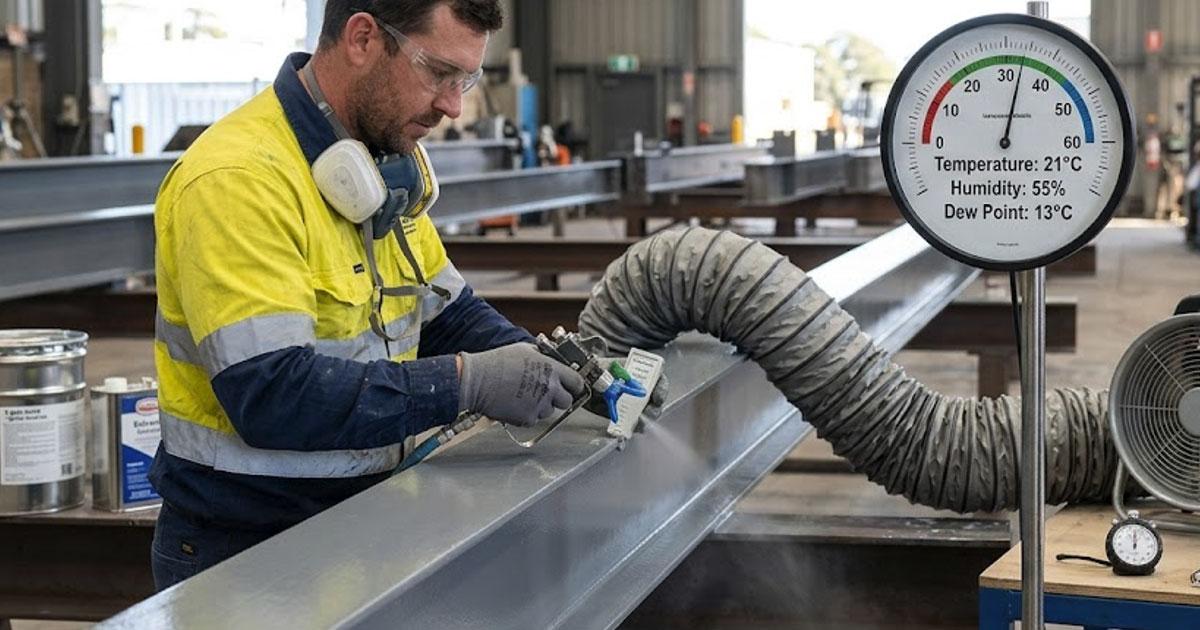
Monitor Environmental Conditions
- Higher humidity slows solvent evaporation
- Lower temperatures extend curing times
- Always adjust your process based on current conditions, not assumptions
Warning Signs of Solvent Entrapment
Catching the issue early can prevent full system failure. While some signs appear quickly, others develop over time.
Watch for:
- Surface bubbling or pinholes after application
- Coatings that remain soft longer than expected
- Wrinkling or lifting between layers
- Strong solvent odors lingering after cure time
These are indicators that solvents are not escaping as they should.
Why Process Control Matters More Than Speed
One of the biggest causes of solvent entrapment is rushing the job. High-build systems require patience and precision. Trying to save time by applying thicker coats or shortening flash times often leads to rework that costs far more in the long run.
A controlled, methodical approach ensures:
- Proper solvent release at every stage
- Strong adhesion between layers
- Consistent curing throughout the film
- Maximum durability of the finished system
The INSECO Standard for High-Performance Coatings
At INSECO INC., we understand that high-build coatings demand more than just proper materials—they require expert execution. Preventing solvent entrapment is part of a larger commitment to process control, environmental awareness, and technical precision.
By focusing on correct film builds, proper timing, and optimal conditions, we help ensure every coating system performs as intended—delivering durability, protection, and long-term reliability in even the most demanding applications.