



Surface preparation is widely recognized as the foundation of coating success, but one detail that often gets overlooked—even by experienced professionals—is surface profile depth. While a surface may appear clean and ready for application, the microscopic anchor pattern created during preparation directly affects adhesion strength, coating durability, and long-term performance.
Understanding how to measure and control surface profile ensures coatings bond properly and perform exactly as intended across demanding environments.
What Surface Profile Really Does for Coating Adhesion
Surface profile refers to the tiny peaks and valleys created during abrasive blasting or mechanical surface preparation. These irregularities create the mechanical bond that allows coatings to anchor securely to the substrate.
If the profile is incorrect:
- Too shallow = weak adhesion and premature failure
- Too deep = insufficient coating coverage and exposed peak tips
- Inconsistent profile = uneven coating performance across the surface
Controlling this variable helps ensure predictable and reliable coating results.
Why Visual Inspection Isn’t Enough
Many professionals rely on appearance alone when evaluating prepared surfaces. Unfortunately, surface profile cannot be accurately judged visually.
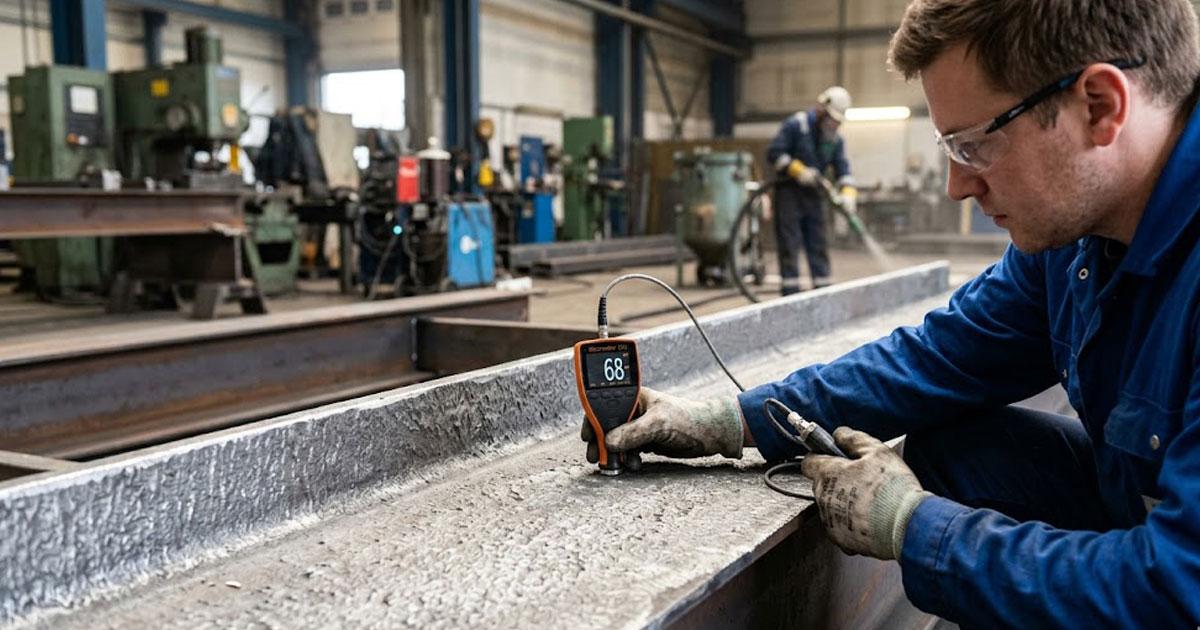
Instead, reliable measurement tools should be used, including:
- Replica tape
- Surface comparators
- Digital profile gauges
Taking measurements at multiple points across the work area ensures consistency before coating begins and helps prevent expensive rework later.
Matching Surface Profile to the Coating System
Different coating systems require different anchor patterns for optimal performance. Selecting the correct profile depth ensures coatings bond effectively and maintain durability over time.
For example:
- Thin-film coatings perform best with lighter profiles
- High-build coatings require deeper anchor patterns
- Protective industrial coatings often need controlled, uniform profiles across large areas
Matching profile depth to coating thickness creates stronger long-term performance.
Environmental Conditions Should Influence Profile Decisions
Surface profile requirements often depend on how the finished coating system will be used. Exposure conditions play a major role in determining the ideal anchor pattern.
Projects exposed to the following conditions benefit from carefully controlled surface profiles:
- Heavy mechanical traffic
- Moisture exposure
- Chemical contact
- Outdoor weather conditions
Planning for these factors during preparation helps coatings achieve their full expected service life.
Consistency Across the Entire Surface Matters
Even when the correct profile depth is achieved in one area, inconsistent preparation elsewhere can create weak points in the coating system. Measuring multiple locations across the substrate ensures uniform adhesion strength throughout the project.
Professionals who verify surface profile instead of relying on assumptions reduce failure risks, improve coating reliability, and deliver stronger long-term performance for clients across a wide range of coating environments.