



If you work in the coatings industry or you are a homeowner trying to protect a wood deck, fence, or outdoor structure, you have likely encountered the same question more than once: should I use a sealer or a stain? On the surface, the two products seem similar. Both come in liquid form, both are applied to wood, and both claim to offer some level of protection. But underneath that surface-level similarity, sealers and stains are fundamentally different products designed to accomplish very different goals.
Understanding that difference is not just an academic exercise. For contractors and coatings businesses, it is the foundation of giving accurate advice, recommending the right product, and building the kind of credibility that generates repeat customers and strong referrals. For homeowners, it means the difference between a surface that holds up for years and one that fails prematurely. At INSECO, we have been answering this question for more than 25 years, and in this post we are going to break it down in a way that is practical, actionable, and useful for both professionals and DIYers.
What a Sealer Actually Does
A wood sealer is designed first and foremost to protect. Its primary job is to penetrate the wood fibers or form a protective barrier on the surface that prevents moisture, UV radiation, mildew, and environmental contaminants from degrading the wood over time. A quality sealer works at the molecular level, bonding with the wood to create a hydrophobic barrier that repels water and resists the expansion and contraction cycles that lead to cracking, warping, and rot.
Penetrating Sealers vs Film-Forming Sealers
Not all sealers work the same way, and understanding the distinction matters when recommending products to clients or selecting one for your own project.
- Penetrating sealers absorb into the wood fiber itself, providing protection from within without significantly altering the surface appearance. These are ideal for natural wood surfaces where preserving the original look is a priority.
- Film-forming sealers create a protective layer on top of the wood surface. These can offer strong protection but are more susceptible to peeling and require more preparation work during reapplication.
- Water-based sealers offer easier cleanup, lower VOC content, and faster dry times, making them increasingly popular in both residential and commercial settings.
- Oil-based sealers tend to penetrate more deeply and can offer excellent long-term durability, though they require more careful handling and longer dry times.
INSECO's flagship product, WOOD Rx, falls into the category of premium penetrating wood sealers. It is engineered to deliver deep penetration and superior moisture repellency without altering the natural character of the wood surface, making it one of the most trusted options in the industry for both residential decks and large-scale commercial projects.
What a Stain Actually Does
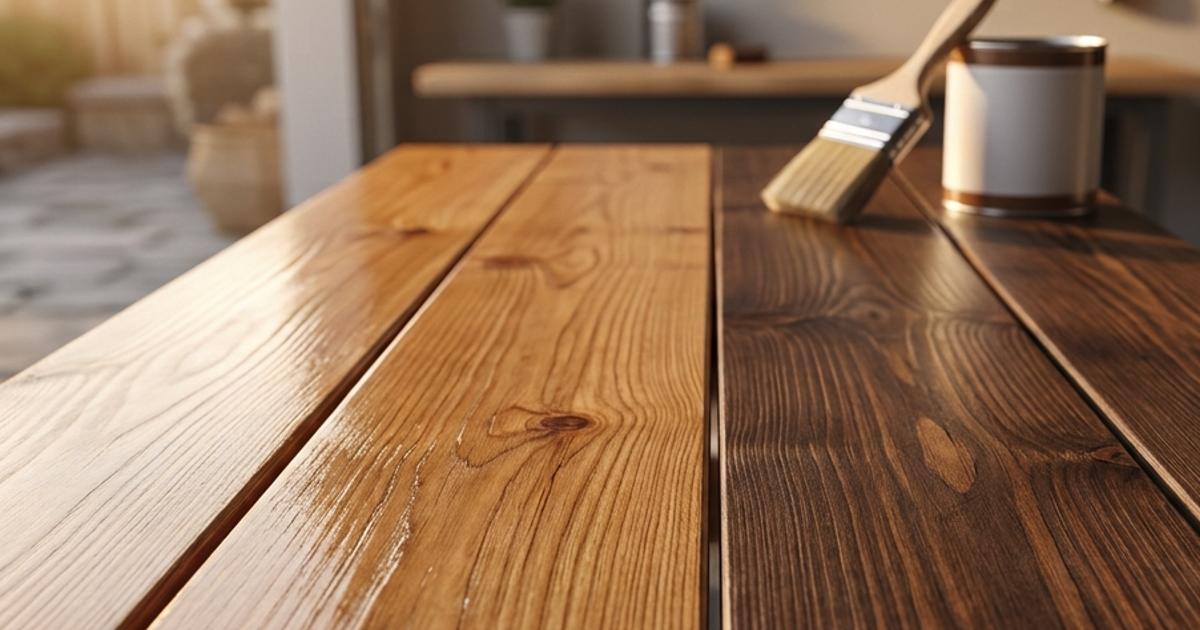
A wood stain is primarily a cosmetic product. Its core purpose is to change or enhance the color of the wood. Stains contain pigments that deposit into the wood grain, altering the appearance of the surface. Some stains also contain protective additives, but protection is generally secondary to aesthetics in a stain formulation.
Transparent, Semi-Transparent, and Solid Stains
Stains are typically categorized by their level of opacity, which directly affects how much of the wood grain remains visible after application.
- Transparent stains provide minimal color change while allowing the full wood grain to show through. They offer very little UV protection but are popular for new or high-quality wood where the natural appearance is the selling point.
- Semi-transparent stains add more color while still allowing some grain visibility. They typically contain more UV inhibitors than transparent options and offer a moderate level of protection.
- Solid stains function more like a paint, completely obscuring the wood grain. They offer the highest level of pigment-based UV protection but eliminate the natural wood appearance entirely and can be prone to peeling over time.
It is important for both contractors and homeowners to understand that even stains marketed as protective formulas are generally not engineered to the same level of moisture resistance and structural protection as a dedicated premium sealer. The pigment in a stain does absorb UV rays, which protects the wood from sun-related discoloration, but it does not necessarily prevent moisture infiltration at the same level as a purpose-built sealer.
The Business Case for Understanding the Difference
For coatings contractors and business owners, the ability to clearly explain the difference between a sealer and a stain is a direct revenue opportunity. Clients who do not understand the distinction are often making purchasing decisions based on marketing language alone, and they rely on the expertise of their contractor to guide them toward the right solution for their specific surface and their specific goals.
When to Recommend a Sealer
A dedicated sealer like WOOD Rx is the right recommendation when the client's primary concern is structural protection. If a deck is showing signs of moisture damage, if a fence is located in a wet climate, or if the wood surface experiences dramatic seasonal temperature swings, a penetrating sealer should be the foundation of any protection plan. Protection comes first. Aesthetics can be addressed with a compatible stain applied separately if desired.
When to Recommend a Stain
When a client's primary goal is to change or refresh the appearance of their wood surface, a stain may be the right starting point. However, this is also an opportunity for a professional contractor to upsell the importance of a sealer as either a base coat or a top coat, depending on the product compatibility. Educating the client about the long-term consequences of color-only treatment without adequate moisture protection positions you as a trusted advisor rather than just a product applicator.
Combining Sealers and Stains for Maximum Results
In many professional applications, the optimal outcome comes from combining both products in a system approach. Applying a quality penetrating sealer as the foundational protective layer and following with a compatible stain for aesthetics gives the client both durability and the look they want. This system-based approach also opens the door to higher-value project scopes and stronger client satisfaction, both of which translate directly into referrals and repeat business.
Common Mistakes to Avoid
Even experienced contractors make application mistakes when working with sealers and stains, particularly when the two are confused or misapplied. Here are some of the most common pitfalls to watch for and avoid.
- Applying a stain over an unsealed surface and expecting it to provide structural protection. The pigment will fade, but more importantly, the wood will continue to absorb moisture and degrade beneath the color layer.
- Applying a sealer over an existing stain without proper surface preparation. Many sealers require a clean, open wood surface to penetrate effectively. An existing stain layer can block absorption and reduce the sealer's effectiveness significantly.
- Assuming all-in-one products perform equally well in both sealing and staining functions. Combination products often represent a compromise in both categories. For projects where performance matters, dedicated products formulated for their specific purpose will almost always outperform multipurpose alternatives.
- Skipping surface preparation before either product is applied. Whether you are using a sealer, a stain, or both, proper cleaning, stripping of old coatings, and allowing adequate dry time are non-negotiable steps that directly affect adhesion and longevity.
Why Product Knowledge Drives Business Growth
At INSECO, we have spent decades working alongside contractors and business owners who have built thriving companies on the strength of their product knowledge and their ability to communicate that knowledge clearly to clients. Understanding the difference between sealers and stains is one of the most fundamental pieces of that expertise, and it directly influences client trust, project outcomes, and long-term business reputation.
When your clients see that you understand not just how to apply a product but why one product is more appropriate than another for their specific situation, you move from being a commodity service provider to being an indispensable expert. That positioning is worth more than any single project, because it is the foundation of a client relationship that generates referrals, repeat work, and long-term business growth.
If you are ready to take your coatings business to the next level with premium products backed by more than 25 years of technical expertise, INSECO is here to support you. From WOOD Rx to our full line of specialty coatings for concrete, brick pavers, and natural stone, we provide not just the products but the technical assistance and knowledge resources you need to succeed. Reach out to our team today to learn more about our product line and how we can help your business grow.