



In the specialty coatings industry, the conversation rarely ends at application. The most successful contractors and the most satisfied homeowners understand a fundamental truth: sealing a surface is the beginning of a protection strategy, not the end of one. Seasonal maintenance is the discipline that separates surfaces that last decades from surfaces that fail prematurely — and for contractors, it is also one of the most powerful recurring revenue opportunities available.
At INSECO, we have spent more than 25 years watching beautifully sealed wood decks, concrete driveways, brick pavers, and natural stone surfaces deteriorate faster than they should — not because the original coating failed, but because seasonal maintenance was overlooked. This guide is designed to change that pattern for both the professionals who apply our products and the property owners who depend on them.
Why Seasonal Maintenance Is the Foundation of Long-Term Surface Protection
Every sealed surface faces a different set of environmental challenges depending on the time of year. Temperature swings, moisture cycles, UV radiation, freeze-thaw stress, and organic debris all interact with coatings in ways that accumulate over time. Ignoring seasonal maintenance does not simply reduce a coating's lifespan — it accelerates deterioration in ways that are often invisible until significant damage has already occurred.
For contractors, this reality represents a significant business opportunity. Property owners who understand the value of seasonal maintenance become reliable, repeat clients. For homeowners and facility managers, proactive seasonal care is the single most cost-effective investment they can make in their surfaces.
Understanding How Each Season Challenges Your Sealed Surfaces
Before diving into specific maintenance actions, it is worth understanding what each season actually does to sealed surfaces at a chemical and physical level. Spring brings rising temperatures and moisture that can push trapped water through weakened sealer layers. Summer delivers intense UV radiation that degrades surface films and causes thermal expansion. Fall introduces falling leaves, organic acids, and the first cold-weather stress cycles. Winter, particularly in northern climates, subjects sealed surfaces to freeze-thaw cycles that are among the most destructive forces any coating will face.
When you understand these forces, seasonal maintenance stops feeling like an optional chore and starts feeling like an essential protection protocol.
A Season-by-Season Maintenance Guide for Sealed Surfaces
Spring: Inspection, Cleaning, and Early Intervention
Spring is the most important maintenance season for sealed surfaces. After the stress of winter, this is the time to assess what the cold months have done and address any issues before they compound through the warmer seasons.
For wood surfaces sealed with products like INSECO's WOOD Rx, spring maintenance should begin with a thorough visual inspection. Look for areas where the sealer has lifted, cracked, or become chalky. Check end-grain areas on deck boards and fence posts, as these are the most vulnerable points for moisture intrusion. Any areas showing signs of moisture damage or early mold growth should be cleaned and retreated before summer heat drives the problem deeper into the wood fiber.
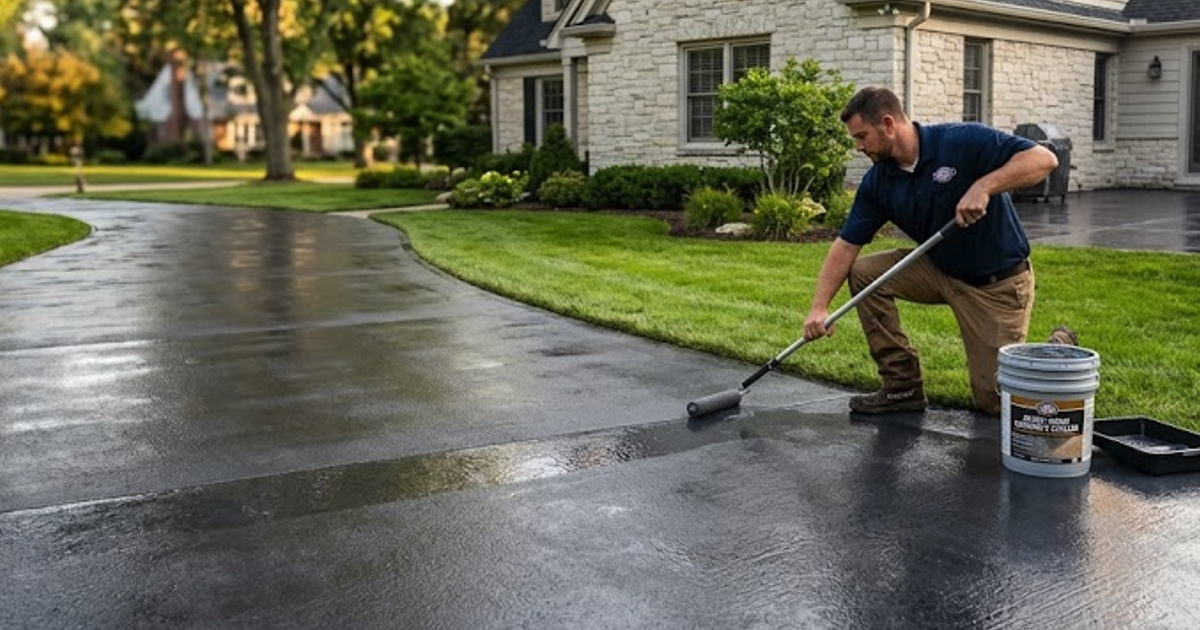
Concrete driveways and patios should be inspected for surface crazing, delamination at edges, or areas where road salt or deicing chemicals may have compromised the coating film. Brick pavers should be checked for efflorescence — the white mineral deposits that indicate water is moving through the substrate and displacing soluble salts. Natural stone surfaces should be inspected for any areas where the sealer has worn thin, particularly in high-traffic zones.
- Clean all surfaces thoroughly using appropriate cleaners for each substrate type
- Rinse concrete and masonry surfaces to remove winter salt and chemical residue
- Allow surfaces to dry completely before any reapplication assessment
- Address any cracks in concrete or grout lines in pavers before they admit more water
- Spot-treat any areas on wood surfaces showing early signs of mold or mildew
- Document conditions with photographs to establish a baseline for the season
Summer: Protection, Monitoring, and UV Management
Summer is the season when sealed surfaces are under the greatest UV stress. For wood surfaces, this means the surface film is working harder than at any other time of year to reflect and resist ultraviolet radiation. High-quality sealers with UV inhibitors, like those in the INSECO product line, are formulated to handle this load — but monitoring is still essential.
During summer months, pay attention to color changes on wood surfaces. Graying or bleaching of sealed wood is a sign that UV inhibitors in the coating are being consumed and that the next application window is approaching. This is not an emergency, but it is important information for planning purposes.
For concrete surfaces, summer heat can cause thermal expansion that stresses coating films at joints and edges. Keep expansion joints clean and free of debris to allow the substrate to move naturally without putting excessive pressure on the coating layer.
Summer is also the season when organic growth — algae, mold, and mildew — is most aggressive on shaded surfaces. Regular rinsing of wood decks, stone patios, and pavers in shaded areas can significantly slow this growth and reduce the cleaning load at the end of the season.
Fall: Deep Cleaning and Pre-Winter Preparation
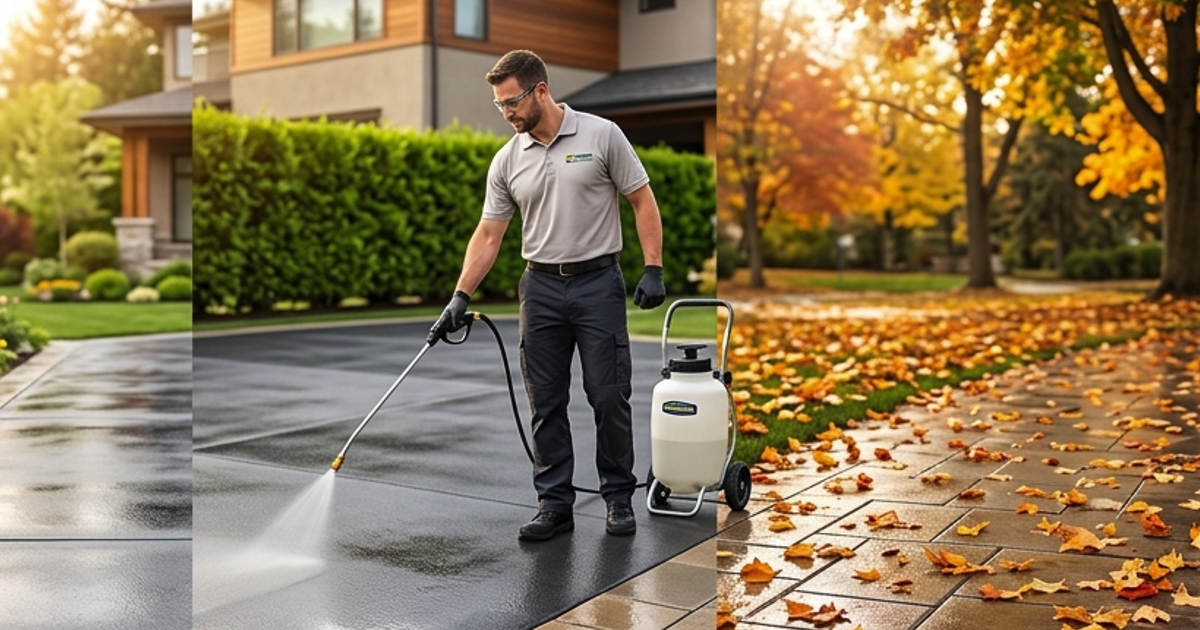
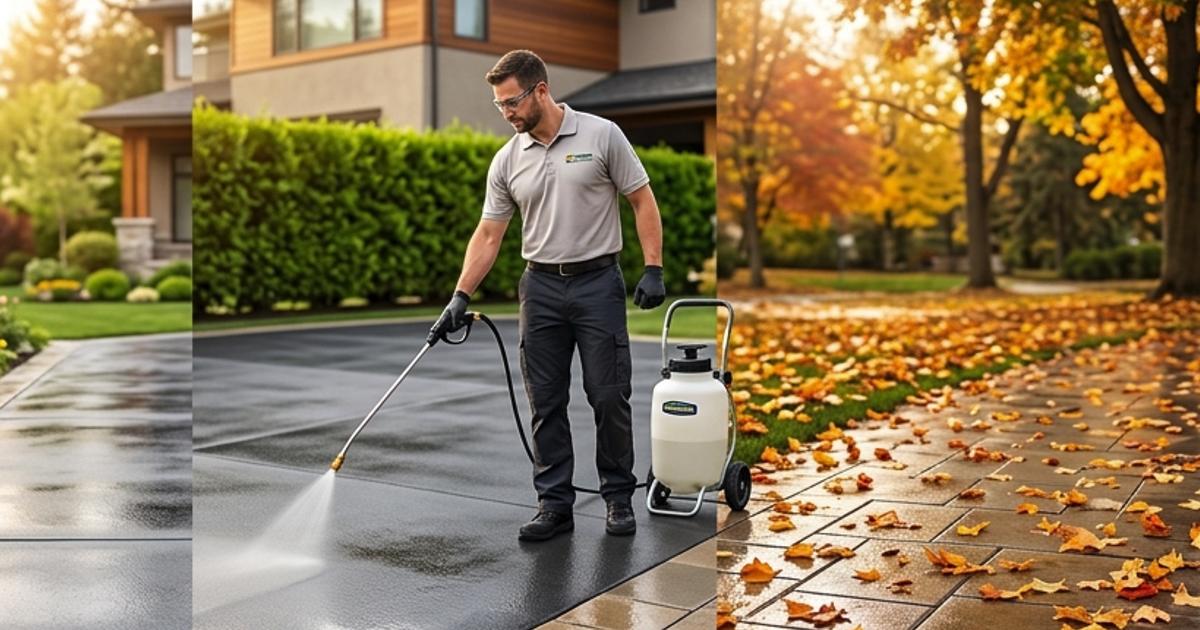
Fall maintenance is about removing organic material and preparing sealed surfaces for the stress of winter. Fallen leaves are a serious threat to sealed surfaces — they trap moisture against the coating, deposit tannins and organic acids that can stain and degrade surface films, and create conditions that are ideal for mold and mildew colonization.
Clear debris from wood decks and pavers promptly throughout the fall season. Do not allow leaves to sit for extended periods, particularly on light-colored concrete or natural stone where tannin staining can be very difficult to remove later.
Fall is also the right time to perform a final deep clean of all sealed surfaces and assess whether any spot retreatment is needed before winter. On wood surfaces, this is often the best opportunity for a maintenance coat of WOOD Rx in areas showing wear, as temperatures are typically still in the optimal application range and surfaces have recovered from summer heat stress.
Winter: Monitoring and Protective Practices
Active resealing is generally not performed during winter months in cold climates, as temperature constraints affect coating application and cure. However, winter is not a passive season for surface protection.
For concrete driveways and patios, avoid the use of sodium chloride-based deicing salts wherever possible. Calcium magnesium acetate or sand are gentler alternatives that cause significantly less damage to sealed concrete surfaces. Avoid metal snow shovels on sealed concrete — plastic blades are far less likely to scratch or chip a coating film.
On wood decks, remove heavy snow accumulations promptly to reduce sustained moisture load on the surface. Do not allow ice to build up in areas where it will require aggressive mechanical removal that could damage the sealer.
For contractors, winter is the ideal time to contact existing clients, review seasonal performance of their surfaces, and schedule spring inspections and maintenance applications. This proactive communication is a key driver of recurring revenue and long-term client retention.
Turning Seasonal Maintenance Into a Business Growth Engine
For contractors in the specialty coatings space, seasonal maintenance programs represent one of the most reliable and scalable revenue opportunities available. The economics are straightforward: a client who signs up for a seasonal maintenance program generates predictable recurring income, requires far less sales effort than acquiring a new client, and becomes an advocate who refers neighbors and colleagues when their surfaces consistently look better than everyone else's.
Building a Maintenance Program That Clients Value
The most effective maintenance programs are built around three principles: clarity, consistency, and demonstrated results. Clients need to understand exactly what they are receiving and why it matters. They need to experience consistent service quality that builds trust over time. And they need to be able to see the difference between their maintained surfaces and unprotected surfaces around them.
INSECO's technical support resources are specifically designed to help contractors build this kind of program. Our product documentation, application guidance, and substrate-specific recommendations give contractors the knowledge base they need to deliver consistent results across a wide range of surface types and seasonal conditions.
Educating Property Owners Drives Long-Term Loyalty
One of the most powerful things a contractor can do is invest time in educating their clients about seasonal maintenance. When a homeowner understands why leaf removal protects their sealed pavers, or why a maintenance coat of WOOD Rx in the fall extends their deck's protection through another winter, they become an informed partner in the process rather than a passive buyer of a service they do not fully understand.
Educated clients ask better questions, appreciate the expertise of their contractor more deeply, and are far less likely to shop on price alone. They become the kind of long-term clients who anchor a growing coatings business and provide the stable revenue base that makes expansion possible.
At INSECO, we have built our business over more than 25 years on the belief that quality products and comprehensive technical knowledge are the foundation of lasting success — for us, for our contractor partners, and for the property owners who depend on properly protected surfaces. Seasonal maintenance is not a small detail. It is the strategy that keeps every investment in surface protection performing at its best, season after season, year after year.