



One of the most overlooked variables in coating performance isn’t the coating itself—it’s the temperature of the surface receiving it. Many applicators monitor air temperature carefully but fail to measure substrate temperature, which can lead to adhesion issues, flashing, improper curing, and premature coating failure.
Understanding the difference between ambient air temperature and substrate temperature helps ensure coatings perform exactly as intended from the moment they’re applied.
Why Substrate Temperature Matters More Than You Think
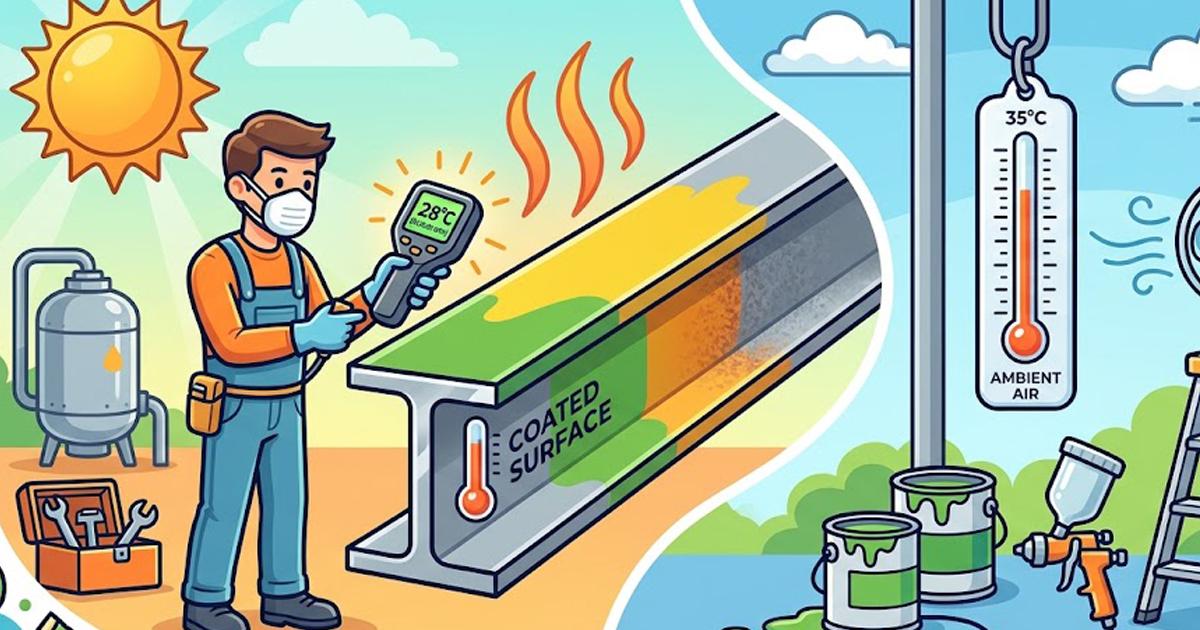
Air temperature tells only part of the story. The surface you’re coating may be significantly warmer or cooler than the surrounding environment depending on sunlight exposure, material type, and time of day.
Substrate temperature directly affects:
- Adhesion strength
- Flow and leveling behavior
- Cure rate consistency
- Solvent evaporation timing
- Risk of condensation forming on the surface
Ignoring these variables can lead to problems even when application conditions appear acceptable on paper.
How Sun Exposure Changes Surface Conditions Quickly
Direct sunlight can raise substrate temperatures well above ambient air temperature within minutes. Darker materials absorb heat faster, creating uneven working conditions across a single project area.
Common examples include:
- Steel surfaces heating rapidly in morning sunlight
- Concrete slabs retaining heat late into the evening
- Exterior walls facing south warming faster than shaded elevations
- Previously coated surfaces reacting differently than bare substrates
Monitoring surface temperature throughout the day helps maintain consistent coating performance across the entire application area.
Why Cold Substrates Can Cause Hidden Application Problems
Cold surfaces slow curing reactions and can interfere with coating bonding at the molecular level. Even when air temperatures meet product specifications, a cold substrate can prevent proper film formation.
This often leads to:
- Reduced adhesion strength
- Extended cure times
- Increased sensitivity to moisture exposure
- Surface defects appearing later in the coating lifecycle
Measuring surface temperature helps applicators confirm conditions are truly within acceptable ranges before starting work.
Understanding the Dew Point Relationship
Substrate temperature becomes especially critical when working near the dew point. If a surface temperature approaches the dew point threshold, condensation may form—even when it’s invisible to the eye.
This can result in:
- Blistering
- Loss of adhesion
- Coating discoloration
- Premature failure
Professional coating teams typically verify that substrate temperatures remain safely above dew point levels throughout application.
Tools That Improve Temperature Accuracy on the Jobsite
Fortunately, checking substrate temperature is simple with the right equipment. Small investments in measurement tools can prevent costly failures later.
Recommended tools include:
- Infrared surface thermometers
- Contact surface probes
- Hygrometers with dew point calculation features
- Environmental monitoring meters designed for coatings work
These tools help applicators confirm that real-world conditions match product specifications before application begins.
Better Measurements Lead to Better Coating Performance
Successful coating applications depend on more than selecting the right product—they depend on applying that product under the right conditions. Monitoring substrate temperature alongside ambient conditions provides a clearer picture of how coatings will behave during application and curing.
By making substrate temperature checks part of every project workflow, contractors can improve adhesion reliability, reduce callbacks, and ensure coatings deliver the long-term protection they’re designed to provide.