



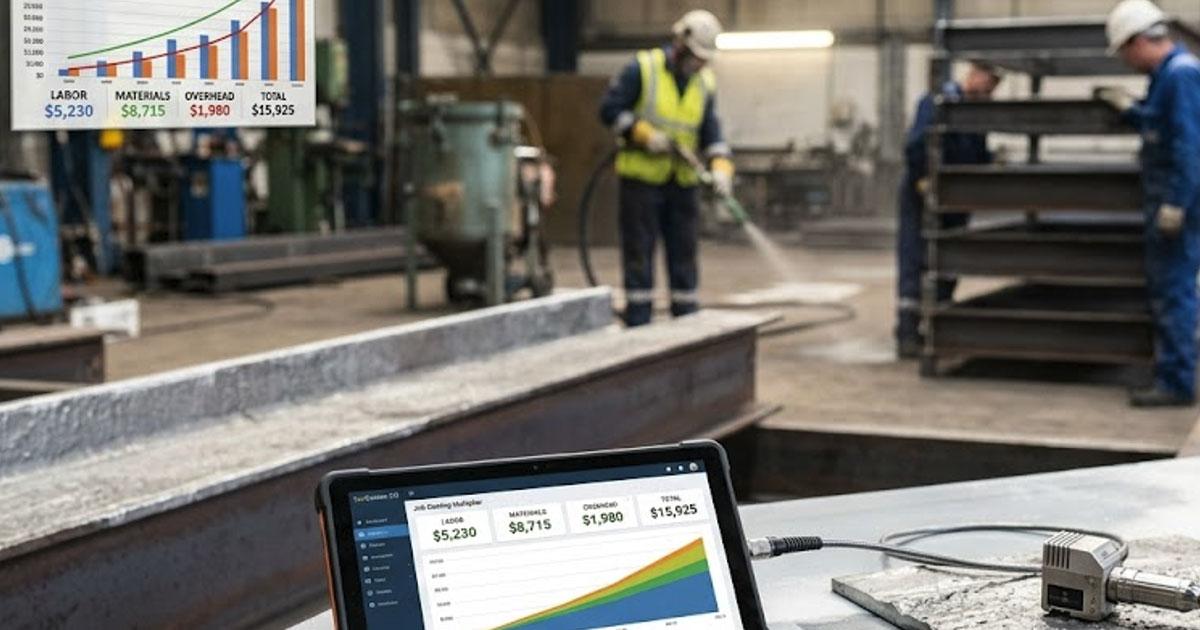

Growth in the coatings industry is often measured by how many projects a company completes each month or how quickly revenue increases year over year. But sustainable growth rarely comes from volume alone. It comes from understanding exactly where profits are being generated and where they are being lost.
That level of clarity starts with disciplined job costing.
Companies that treat job costing as a strategic tool—not just an accounting exercise—gain the insight needed to scale confidently while protecting margins and improving long-term stability.
Why Revenue Growth Alone Can Be Misleading
Many coatings businesses assume they are growing successfully because revenue continues increasing. However, without accurate job costing systems in place, higher revenue can sometimes hide shrinking profitability.
Job costing reveals:
- Whether estimates are aligned with actual labor performance
- Which coating systems produce the strongest margins
- Where material usage differs from expectations
- Which project types introduce hidden costs
This visibility allows business owners to make decisions based on facts instead of assumptions.
Identifying the Most Profitable Project Types
Not all coating projects contribute equally to business growth. Some create predictable margins and repeat opportunities, while others consume resources without delivering proportional returns.
Consistent job costing helps businesses:
- Recognize their most profitable service categories
- Prioritize the right types of clients
- Focus marketing toward higher-performing opportunities
- Reduce exposure to projects that limit scalability
Over time, this clarity strengthens both positioning and profitability.
Improving Estimating Accuracy as the Company Scales
Estimating becomes more complex as coatings businesses grow. Larger teams, multiple crews, and expanding service areas introduce variables that make assumptions less reliable.
Job costing creates a feedback loop that improves estimate accuracy by:
- Comparing projected labor hours to actual field performance
- Tracking material consumption patterns across project types
- Identifying recurring inefficiencies early
- Refining production expectations for future bids
Better estimates lead directly to stronger margins and more predictable scheduling decisions.
Supporting Smarter Hiring and Equipment Investments
Growth often requires expanding crews or investing in specialized equipment. Without job costing data, those decisions can feel uncertain or reactive.
With accurate cost tracking in place, companies can determine:
- When additional crews will increase profitability
- Which equipment purchases improve production efficiency
- Where training investments deliver measurable returns
- How labor structure affects project performance
These insights allow expansion decisions to support stability rather than create risk.
Turning Operational Visibility into Long-Term Stability
Companies that scale successfully in the coatings industry rarely rely on intuition alone. They build systems that provide consistent performance data across every project they complete.
Disciplined job costing transforms daily project activity into strategic insight. Over time, this visibility strengthens estimating accuracy, improves resource allocation, and helps coatings businesses grow with confidence instead of uncertainty.